
Whole House Reverse Osmosis System: What It Is, What It Requires, and Where It Breaks Down
A whole house reverse osmosis system is often pitched as the cleanest, safest, most complete way to treat residential water.
That framing is seductive.
And frequently wrong.
This is one of the few home upgrades where spending more can actually make your water strategy worse — not better — if the system is installed without a problem large enough to justify it.
Whole-house RO is not an upgrade.
It is a structural intervention.
It changes how water is processed, stored, pressurized, and disposed of across the entire home. When installed for the right reason, it solves problems no smaller system can touch. When installed casually, it becomes one of the most expensive forms of over-engineering in residential plumbing.
This article exists to draw that line clearly.
Quick Structural Reality Check
Before going deeper, understand what this decision commits you to:
- Permanent infrastructure inside the home
- Multi-thousand-dollar installation reality
- Dedicated space requirements
- Ongoing operating costs
- Higher maintenance discipline
- Continuous wastewater production
Verify: Many homeowners who regret installing whole-house RO don’t regret the water quality — they regret underestimating the system’s scale.
This is not a convenience purchase.
It is an operational commitment.
What “Whole House Reverse Osmosis” Actually Means
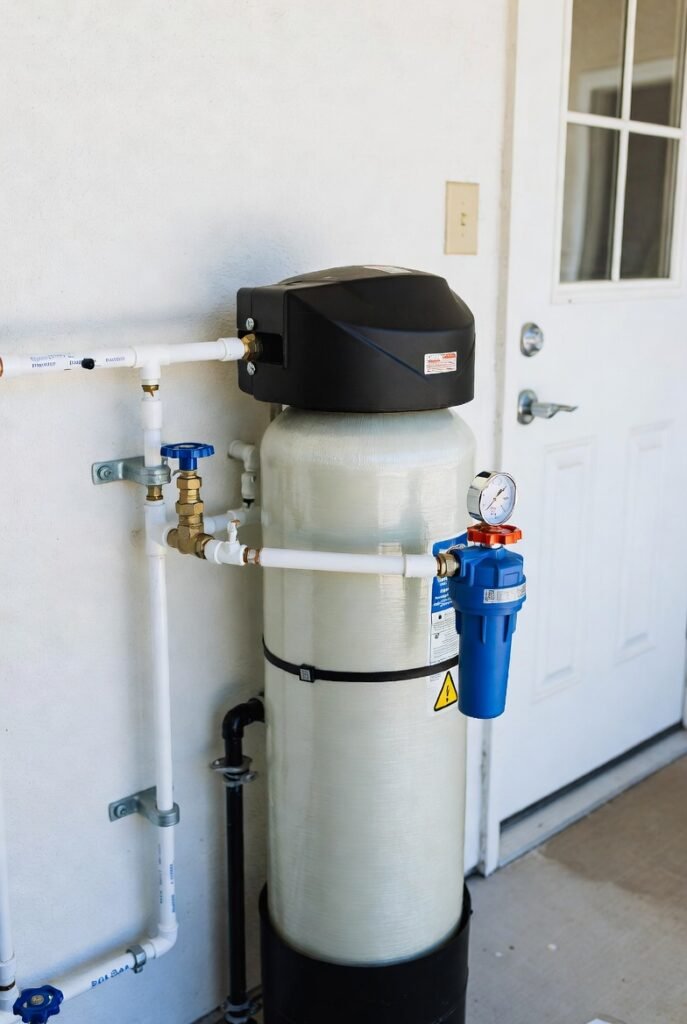
A whole-house reverse osmosis system cost treats every gallon entering the home — before it reaches any fixture.
That single decision triggers five unavoidable consequences:
- High flow demand instead of intermittent use
- Continuous operation instead of on-demand filtering
- Mandatory pretreatment to protect membranes
- Storage and repressurization requirements
- Permanent reject-water management
This is not filtration.
This is water infrastructure.
What This Decision Really Commits You To
Infrastructure decisions should never feel casual.
Whole-house RO typically means accepting:
- Installation that can rival major appliance projects
- Equipment that occupies real mechanical space
- Long-term service planning
- Component replacement cycles
- Utility impacts
Unlike point-of-use systems, removal is not always simple once plumbing is configured around it.
Think of this less like buying a filter…
…and more like adding a mechanical subsystem to the home.
The Structural Anatomy of a Whole-House RO System
A whole-house RO system is not a single device.
It is a chain of dependencies — and each layer protects the next.
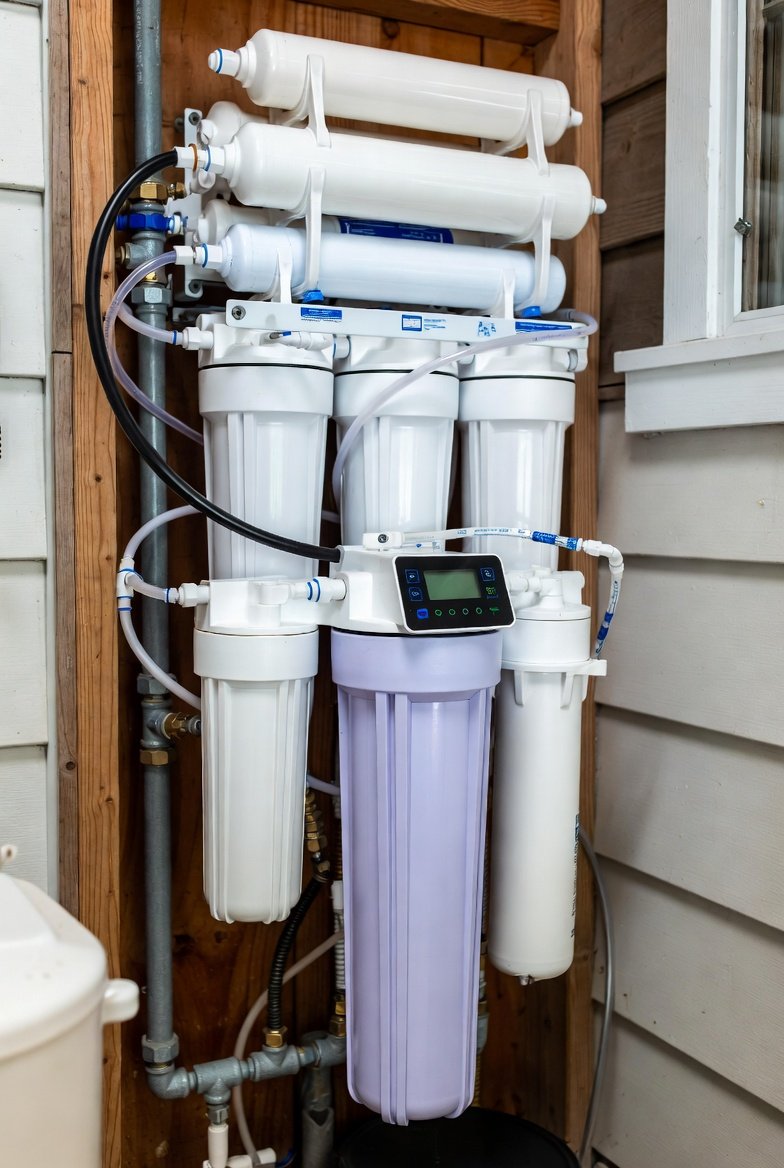
At minimum, most systems include:
Pretreatment Stage
Sediment filtration, carbon filtration, and often water softening prevent membrane damage.
High-Capacity RO Membrane Assembly
Engineered for continuous processing rather than intermittent demand.
Storage Tanks
Because RO produces water slowly, purified water must be buffered.
Repressurization Pump
Restores usable pressure for showers, appliances, and fixtures.
Drainage Infrastructure
Manages reject water generated during purification.
If any layer is undersized, skipped, or rushed, the system begins degrading immediately — even if that degradation isn’t visible yet.
Pretreatment Is Not Optional — It Is the System
This cannot be overstated.
People who underbuild pretreatment destroy membranes.
It is the single most common failure point in whole-house RO installations — and where costs quietly resurface later as “unexpected maintenance cost.”
Pretreatment exists to stop:
- Sediment fouling
- Chlorine oxidation
- Hardness scaling
Without it:
- Membranes fail early
- Pressure declines
- Efficiency drops
- Water waste rises
There is no workaround here.
Installer perspective: Experienced water professionals often say membrane problems almost always begin upstream.
Storage & Pressure — Why Tanks Are Mandatory
Homes consume water instantly.
Reverse osmosis does not produce water instantly.
To reconcile this mismatch, whole-house systems rely on:
- Large storage tanks
- Pressure pumps
- Flow balancing
Without this layer:
- Showers weaken
- Appliances starve
- Pressure fluctuates
- Complaints follow
This is why these systems occupy meaningful physical space.
Physics does not negotiate.
A Physical Reality Check Most Buyers Never Visualize
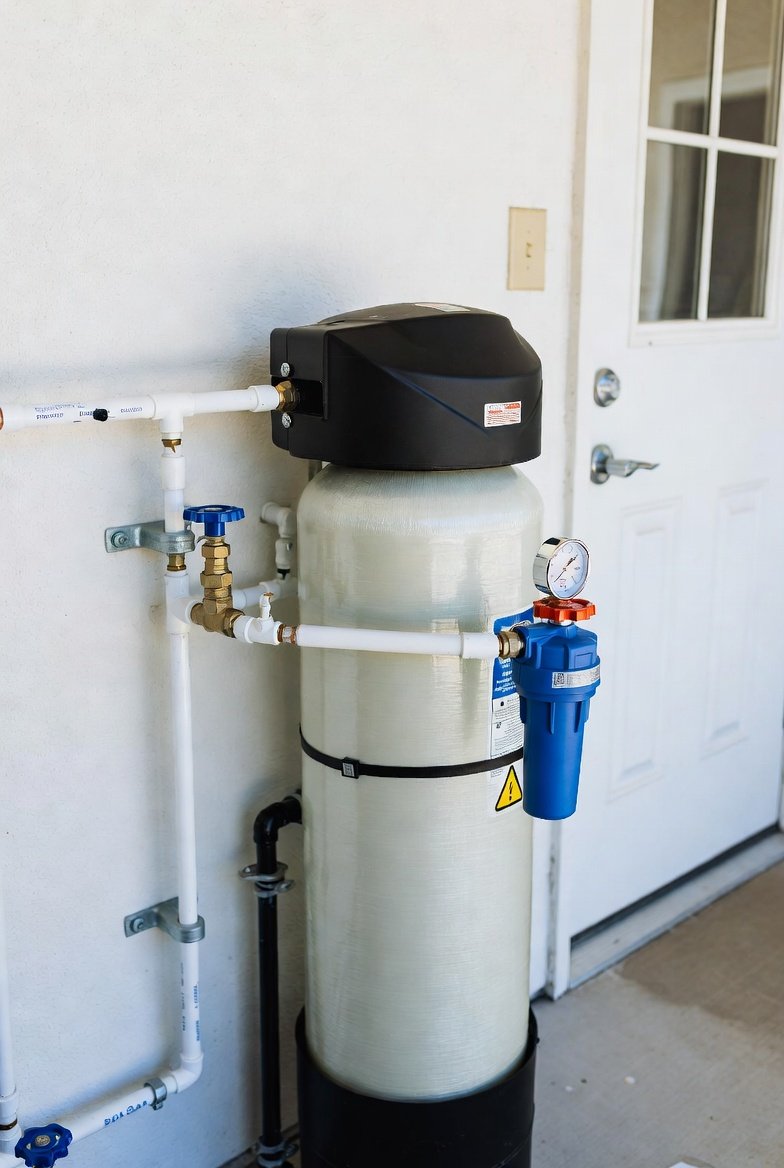
In many homes, a whole-house RO setup occupies a footprint comparable to a water heater — sometimes larger once tanks are included.
This matters because:
- Space limitations raise installation cost
- Access constraints raise maintenance cost
- Drain routing becomes more complex
Homes without basements or utility rooms often face performance compromises simply due to layout.
Installers rarely control this variable.
The home does.
Whole-House RO Decision Matrix
If Your Primary Problem Is | Whole-House RO Makes Sense |
Drinking water quality | ❌ Usually no |
Mild hardness | ❌ No |
Chlorine taste | ❌ Carbon often solves it |
High-TDS well water | ✅ Often justified |
Verified dissolved contamination | ✅ Strong candidate |
Regulatory health concerns | ✅ Sometimes necessary |
Whole-house RO is a structural exception — not a default recommendation.
How Whole-House RO Changes Water Behavior
Reverse osmosis removes nearly all dissolved minerals.
At household scale, this alters how water interacts with plumbing.
Common effects include:
- Reduced mineral buffering
- More chemically aggressive water
- Greater sensitivity in piping
Because of this, many systems incorporate remineralization or blending downstream to stabilize water before distribution.
In many regions, this is not optional.
It is protective.
Why Some Installers Quietly Recommend Against It
Contrary to assumption, many experienced installers approach whole-house RO cautiously.
Not because it performs poorly…
…but because expectations are often unrealistic.
Common installer concerns include:
- Space complaints after osmosis installation
- Maintenance discipline fading
- Unexpected operating costs
- Homeowners underestimating system scale
Field insight: Installers frequently report that dissatisfaction stems from expectation mismatch — not filtration quality.
Complex systems demand informed owners.
When a Whole-House RO System Is Truly Justified
Whole-house RO is justified when scale is unavoidable.
Legitimate use cases include:
- Verified system-wide dissolved contaminants
- Well water with persistently high TDS
- Health-driven filtration requirements
- Situations where point-of-use treatment cannot solve the issue
In these scenarios, cost reflects necessity — not luxury.
Infrastructure exists to solve infrastructure-sized problems.
When Whole-House RO Becomes a Costly Mistake
Overspending typically happens when the system is installed to solve a smaller problem.
Common misfires include:
- Treating drinking water issues at infrastructure scale
- Installing RO when carbon filtration would suffice
- Ignoring space or drainage limitations
- Underestimating maintenance commitment
Power without precision is waste.
Maintenance Reality — No Sugarcoating
Whole-house RO ownership demands discipline.
Expect:
- Regular pretreatment replacement
- Periodic membrane service
- Pressure monitoring
- Efficiency checks
- Acceptance of wastewater
These systems reward attentive owners…
…and punish neglect.
The Real Risk: Solving the Wrong Problem
The most expensive whole-house RO mistake is rarely mechanical failure.
It is scope misjudgment.
Using infrastructure-level treatment for a point-of-use problem:
- Multiplies cost
- Expands failure points
- Increases maintenance load
Bigger is not automatically better.
Correct is better.
The Long-Term Ownership Gravity
Before installing, ask a harder question:
Will this system still make sense ten years from now?
Infrastructure decisions echo longer than appliance purchases.
Whole-house RO often becomes part of the home’s mechanical identity — influencing resale conversations, inspection narratives, and service planning.
This is not a temporary upgrade.
It is operational architecture.
Final Structural Verdict
A whole house reverse osmosis system is not “better” by default.
It is heavier.
More complex.
More demanding.
When the problem genuinely requires that scale, performance can be exceptional.
When it doesn’t, the system becomes an expensive lesson in over-engineering.
Before choosing whole-house RO, verify the scope of the problem.
The right system is not the most comprehensive one.
It is the one aligned with reality.