
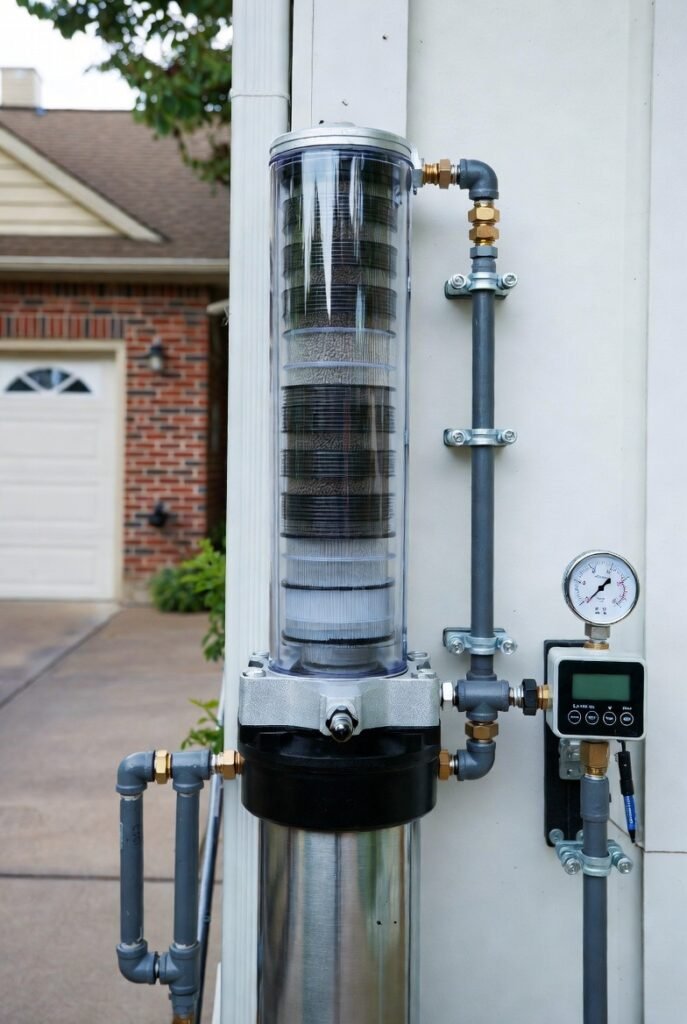
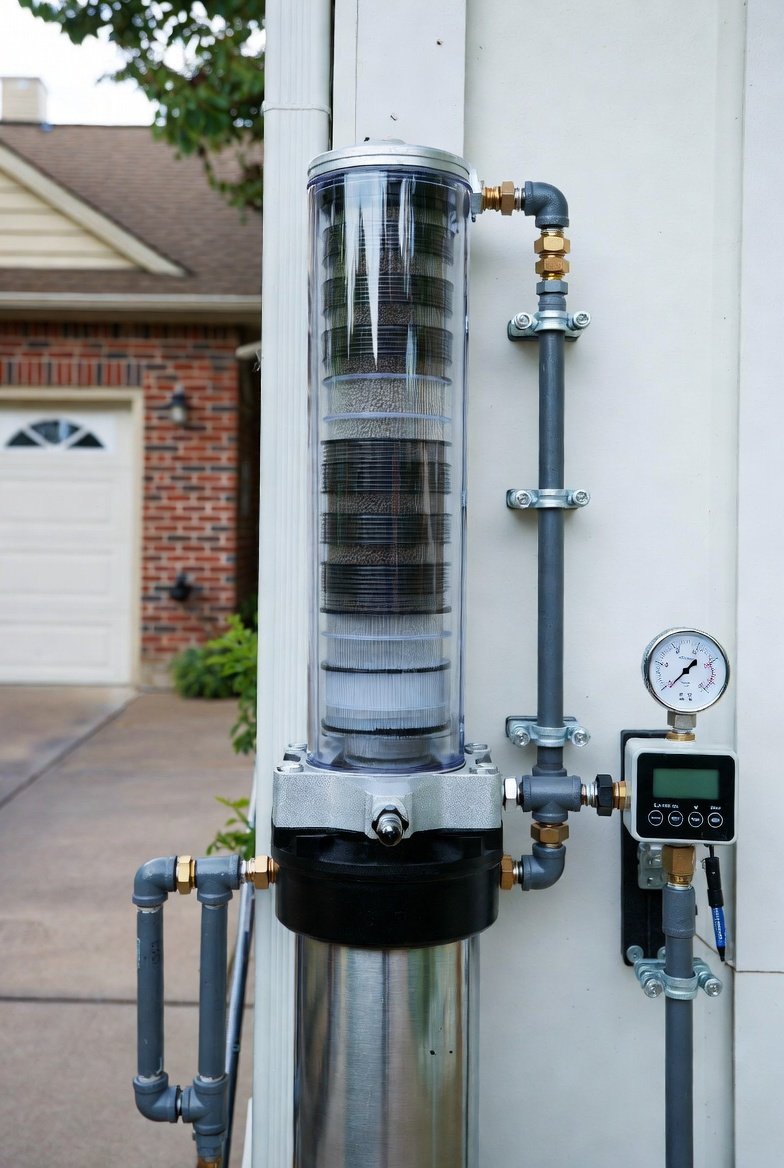
Whole House Reverse Osmosis System Cost: What Homes Really Pay—and Where It Goes Wrong
Whole-house reverse osmosis is one of the few home upgrades where spending more does not automatically produce a better outcome.
In fact, overspending here often means treating thousands of gallons of water that never needed purification — while committing yourself to years of higher operating costs.
Most homeowners researching whole house reverse osmosis system cost are already standing at a financial crossroads. A water test, a contractor recommendation, or persistent water-quality concerns have raised the possibility of installing one of the most comprehensive filtration systems available.
The real question is no longer “How much does it cost?”
It is:
Am I solving a serious water problem — or building an unnecessarily expensive system?
Because once installed, whole-house RO becomes infrastructure. Removing it later is rare. Maintaining it becomes part of the home’s long-term operating budget.
Understanding the true cost — upfront and over time — is what prevents this decision from turning into a quiet financial drag.
Whole House Reverse Osmosis Cost — Immediate Reality Check
- Most professionally installed systems fall between $4,000 and $12,000+
- Larger or complex homes can exceed $15,000
- Annual maintenance typically ranges from $300 to $1,000
- Membrane replacements alone often cost $400–$1,200
- Electricity and wastewater add small but continuous operating expenses
Verify: If your primary concern is drinking water rather than system-wide contamination, a whole-house RO system is frequently more treatment than the home actually requires.
Why Costs Escalate Faster Than Homeowners Expect
The price gap between under-sink and whole-house RO is not branding.
It is an engineering scale.
A whole-house system must:
- Treat every drop entering the home
- Maintain pressure during simultaneous showers, laundry, and sinks
- Protect delicate membranes from chlorine, sediment, and hardness
- Continuously manage reject water
Here is the core financial tension:
Most residential water does not need drinking-level purification — yet you are paying to produce it anyway.
That mismatch is where overspending begins.
Average Whole House Reverse Osmosis Cost Breakdown
Cost Layer | Typical Range | Why It Matters |
Core RO system | $2,000 – $6,000 | High-capacity filtration |
Pretreatment | $800 – $3,000 | Prevents membrane destruction |
Storage tanks & pumps | $500 – $2,500 | Maintains usable pressure |
Installation labor | $1,000 – $4,000 | Engineering + plumbing |
Electrical work | $300 – $1,200 | Required for pumps |
Reality: Equipment is often not the majority of the bill — infrastructure is.
A Physical Reality Check Most Buyers Never Picture
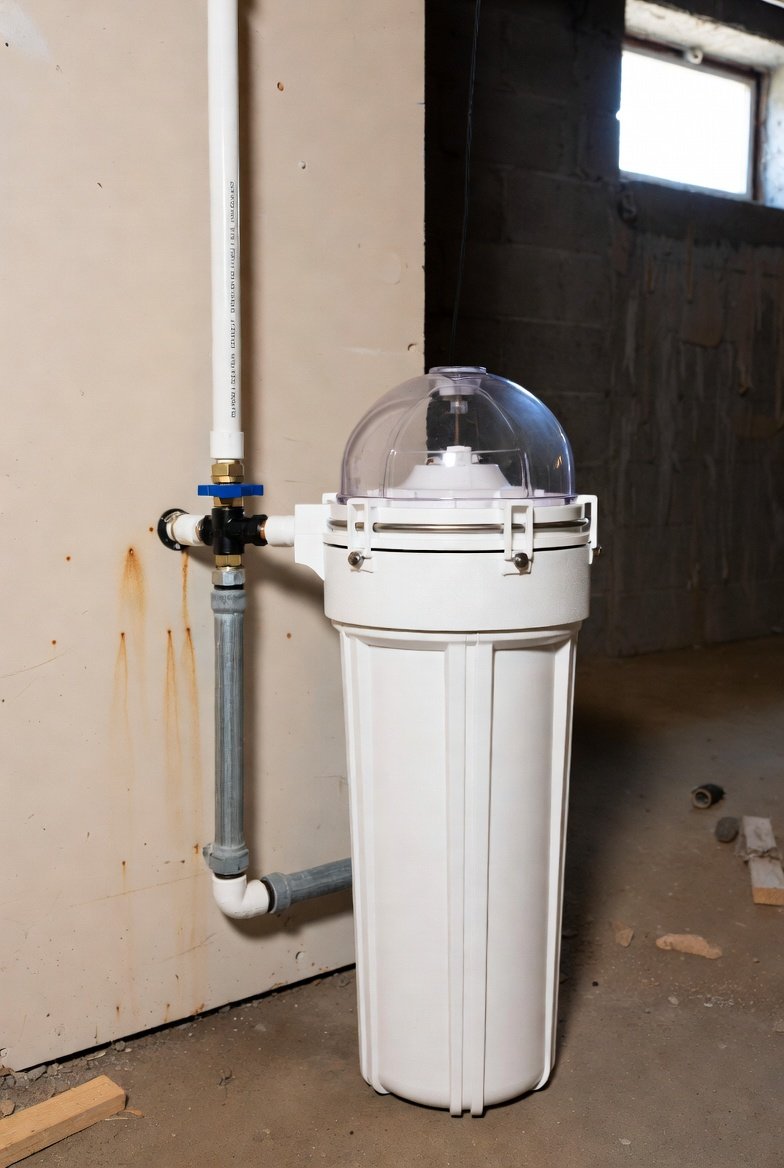
Whole-house RO is not a compact appliance.
In many homes, the system occupies space comparable to a water heater — often larger once tanks are included.
Typical configuration includes:
- Multi-stage pretreatment filters
- RO membrane housing
- Large storage tanks
- Booster pumps
- Dedicated drainage
Installer perspective: Homes without a basement, garage, or utility zone typically face higher install costs simply because the system must be engineered into tighter spaces.
Space is a financial variable.
The Oversizing Trap — The Most Expensive Mistake Homeowners Make
Water treatment professionals see this pattern constantly:
A homeowner installs a whole-house RO “just to be safe.”
Years later, they realize they are paying to purify water used for:
- Toilet flushing
- Laundry
- Irrigation
- Cleaning
Water that rarely requires RO-level treatment.
Oversizing doesn’t just increase the purchase price.
It multiplies:
- Filter costs
- Membrane wear
- Wastewater volume
- Energy usage
Field insight: Many installers say the most satisfied homeowners are those who sized their treatment conservatively — and upgraded only if testing later proved it necessary.
Who Should Seriously Consider Whole-House RO
This system becomes logical when risk is real.
Strong candidates include homes with:
- High total dissolved solids (TDS)
- Persistent well-water contamination
- Nitrates, arsenic, or similar dissolved pollutants
- System-wide water quality concerns
- Failed results from simpler filtration
In these cases, cost reflects necessity — not excess.
Who Should Probably NOT Install One
Whole-house RO is often difficult to justify when:
- The main concern is drinking water
- A softener or carbon filter would resolve the issue
- Water testing shows localized rather than systemic problems
- Pressure or drainage conditions are marginal
For many households, pairing pretreatment with a point-of-use RO system delivers safer water at a fraction of the lifetime cost.
Negative qualification like this is not pessimism — it is how expensive mistakes are avoided.
Pretreatment Is Not Optional — And This Is Where Systems Fail
The number-one cause of premature membrane failure is inadequate pretreatment.
Without protection:
- Sediment clogs membranes
- Chlorine degrades filtration layers
- Hardness creates scaling
Membranes are costly. Replacing them repeatedly is far more expensive than installing proper pretreatment from the start.
Professional observation: Attempting to “simplify” system design is one of the fastest paths to long-term cost escalation.
Pretreatment is financial insurance.
Installation Costs — Why Quotes Suddenly Jump
Homeowners are often shocked when quotes vary by several thousand dollars.
The reason is rarely sales strategy.
It is layout physics.
Costs rise sharply when:
- Drainage is distant
- Water pressure fluctuates
- Plumbing is outdated
- Structural routing is required
- The main line is difficult to access
Whole-house RO must be engineered around the home — not dropped in like a refrigerator.
Engineering time is expensive.
What Drives Whole-House RO Cost the Most?
Three variables dominate pricing:
- Installation complexity
- Pretreatment depth
- System capacity
- Reverse osmosis system costs
Brand differences typically influence price less than homeowners expect.
Engineering decisions move the real number.
The Ownership Math Most Buyers Underestimate
Purchase price is only the opening chapter.
Operating costs define the long-term financial reality.
Typical Annual Maintenance
- Pretreatment filters: $150 – $500
- Membrane service (averaged): $150 – $400
- Occasional professional servicing
5-Year vs 10–15-Year Cost Reality
Time Horizon | Estimated Total Cost |
5 Years | $7,000 – $18,000+ |
10–15 Years | $12,000 – $30,000+ |
This is why whole-house RO should be evaluated as infrastructure — not equipment.
The longer you own the home, the more this math matters.
Water Waste — The Operating Cost Many Buyers Miss
All RO systems reject some water.
At under-sink scale, this is minor.
At whole-house scale, it becomes operational infrastructure.
Higher wastewater volume can:
- Increase utility bills
- Stress septic systems
- Require robust drainage
Reviewing local water rates before installation can prevent unexpected long-term costs.
Cost vs Risk vs Necessity — Decision Matrix
Scenario | Risk Level | Recommended Approach |
Severe contamination | High | Whole-house RO justified |
Moderate dissolved solids | Medium | Compare with softening + RO |
Drinking water concerns only | Low | Point-of-use RO preferred |
This framework prevents decisions driven by fear rather than data.
Installer Regret Patterns (What Professionals Quietly Notice)
Ask installers about past projects and many will describe the same homeowner comment:
“I wish someone told me this before I installed it.”
Usually, the regret traces back to oversizing — not system failure.
Properly matched systems rarely generate buyer’s remorse.
Oversized ones often do.
The Correct Way to Frame This Decision
The question is not:
“Is whole-house RO expensive?”
It is:
“What risk exists if I don’t install it?”
If contamination affects every tap, cost becomes secondary.
If it doesn’t, over-treatment becomes a long-term financial commitment with limited upside.
Whole-House vs Point-of-Use — The Financial Lens
System | What It Treats | Cost Efficiency |
Point-of-use RO | Drinking & cooking water | Highly efficient |
Whole-house RO | Entire home | High cost unless necessary |
Bigger is not automatically better.
Correctly matched is better.
Final Direction
Before requesting another quote, confirm the problem you are solving.
Compare:
- Whole-house RO vs targeted filtration
- Infrastructure cost vs risk reduction
- Lifetime ownership vs immediate protection
For some homes, whole-house reverse best osmosis system is a powerful safeguard.
For others, it is simply the largest — and most expensive — solution available.
The smartest investment is not the biggest system.
It is the one precisely aligned with the water risks your home actually faces.