
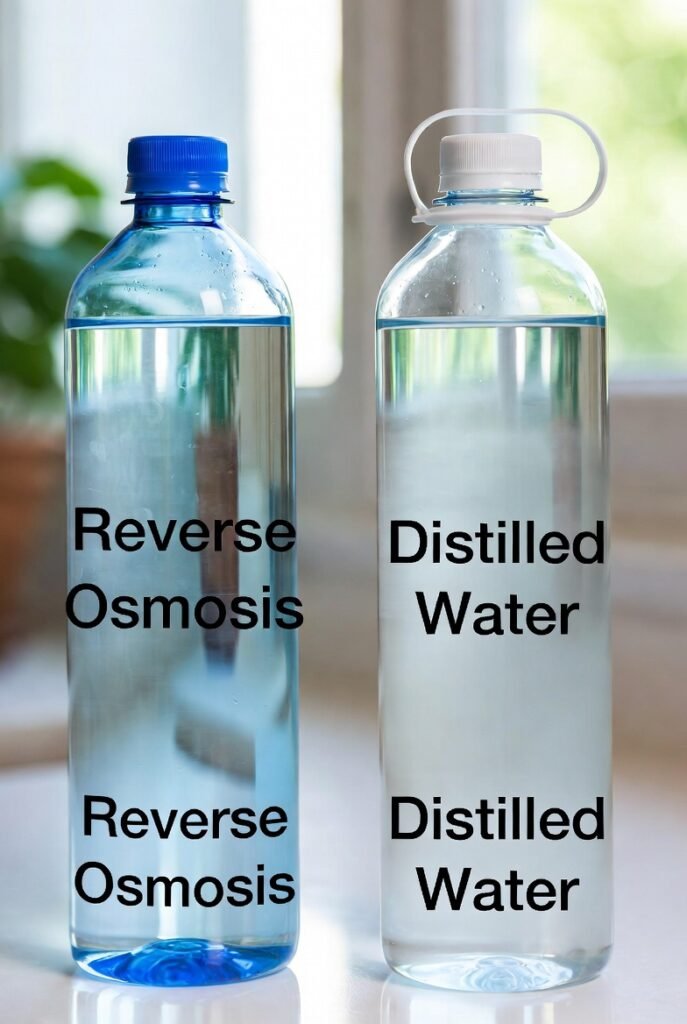
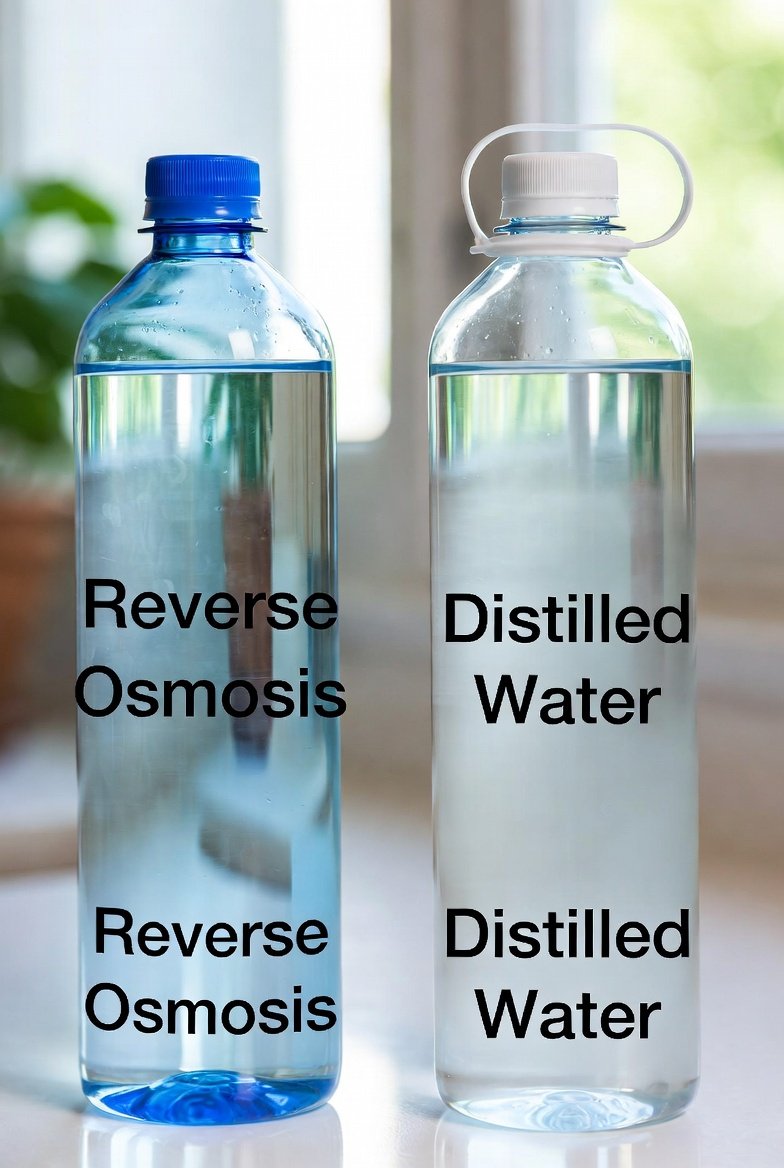
Reverse Osmosis vs Distilled Water: The Real Difference for Everyday Use
Most people who switch to distilled water don’t stop because it’s unsafe.
They stop because it quietly refuses to fit into daily life.
That detail is almost completely missing from comparison pages — and it’s why so many feel technically correct yet practically useless.
Quick Reality Check
Before comparing specs, anchor this:
- Both exceed safe drinking standards by a wide margin
- Neither is inherently “healthier” for the average person
- The long-term winner is the option people actually keep using
- Tankless Ro
Behavioral abandonment — not safety — is the primary reason distilled water disappears from kitchens.
The Core Difference (Decision Anchor)
Here is the cleanest way to understand the divide:
- Reverse osmosis filters water continuously
- Distillation produces water in batches through boiling
Both purify water — only one disappears into your routine. That distinction matters more than any contaminant chart.
How Reverse Osmosis Works (Practical Ownership View)
Reverse osmosis pushes water through a semi-permeable membrane that rejects dissolved contaminants while allowing purified water to pass.
Typical home system:
- Water moves through pre-filters
- It passes across the RO membrane
- Clean water is stored or delivered instantly
Once installed, the system becomes background infrastructure. No heating. No refilling. No daily setup. You turn the tap — water is simply there.
How Distilled Water Is Produced — And Why It Changes Behavior
Distillation is mechanically simple but behaviorally demanding:
- Water is boiled into steam
- Steam is captured
- Condensed back into liquid
Nearly everything is left behind. But the method introduces friction:
- High energy demand
- Slow production
- Limited output per cycle
- Storage requirements
Water becomes something you manage, rather than something that simply exists. This explains most long-term abandonment.
Purity: The Myth That Dominates Comparisons
Distilled Water
- Near-total contaminant removal
- Essentially zero mineral content
Reverse Osmosis
- Removes the vast majority of dissolved contaminants
- Trace minerals may remain unless post-treated
Both exceed practical drinking needs by a large margin. For daily hydration, the purity difference is functionally irrelevant. This is not a laboratory decision — it is a lifestyle one.
Taste & Drinkability — The Largest SERP Blind Spot
Distilled Water
- Extremely flat profile
- Often described as “empty”
- Can feel unnatural to drink repeatedly
Reverse Osmosis Water
- Clean, neutral flavor
- Familiar mouthfeel
- Easier long-term adoption
Taste is not cosmetic. If water is not enjoyable, people unconsciously reduce intake or abandon it entirely.
Convenience — The True Decision Driver
Reverse Osmosis
- Always available
- Dispensed like tap water
- No daily effort
Distilled Water
- Must be produced or purchased
- Stored manually
- Refilled repeatedly
Distilled water fails not because it is inferior — it fails because it demands attention.
Cost Gravity — Where Reality Quietly Wins
Reverse Osmosis
- Upfront equipment maintenance cost
- Predictable filter replacements
- Very low cost per gallon long-term
Distilled Water
- Continuous purchase or significant electricity usage
- Short term → manageable
- Long term → almost never sustainable
Ownership Commitment Snapshot
Factor | Reverse Osmosis | Distilled |
Daily effort | Minimal | Ongoing |
Cost trajectory | Declines over time | Never stops |
Behavioral friction | Low | High |
Infrastructure feel | Built-in | Managed |
The cheaper system is often the one you stop thinking about.
RO vs Distilled for Daily Life (Decision Table)
Use Case | Reverse Osmosis | Distilled Water |
Daily drinking | Excellent | Poor |
Cooking | Ideal | Often avoided |
Cost over time | Low | High |
Effort | Minimal | Continuous |
Sustainability | High | Low |
This reflects behavior — not laboratory specs.
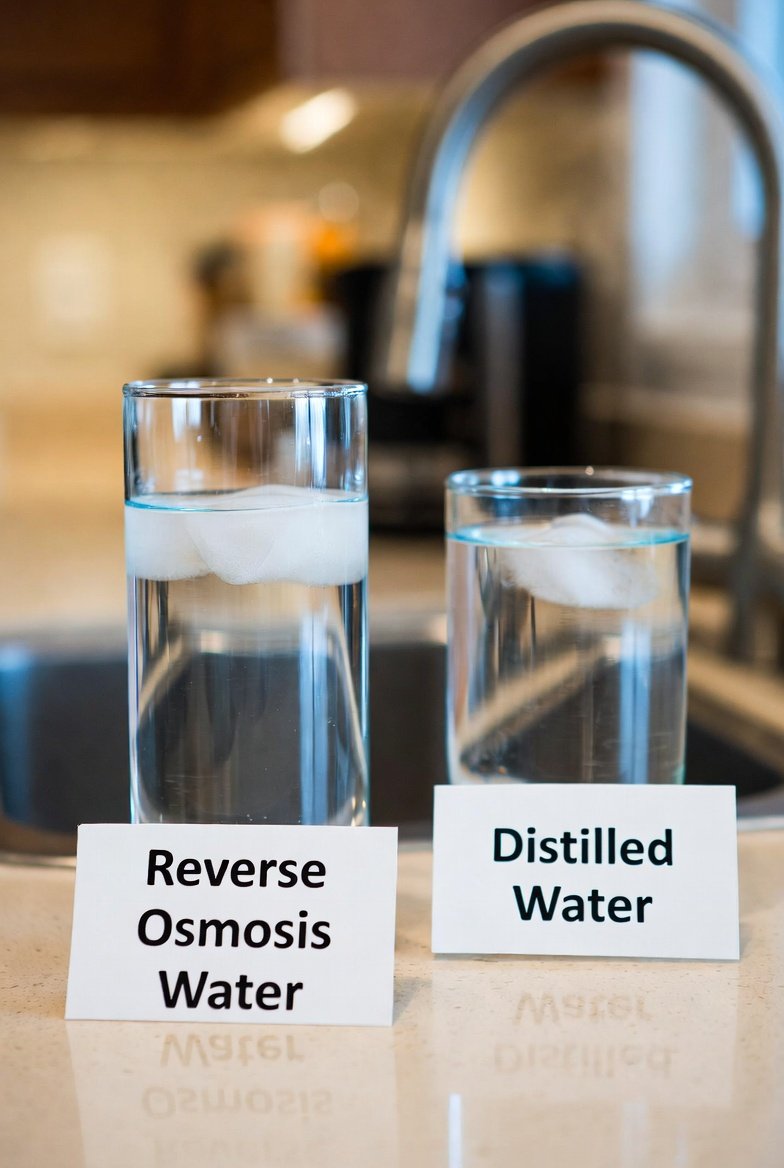
Coffee, Tea, and Cooking — The Overlooked Difference
- Distillation strips nearly everything, including minerals that influence extraction
- Coffee tastes flatter
- Tea loses complexity
- Food preparation feels muted
Reverse osmosis System behaves closer to softened tap water, integrating smoothly into kitchens.
Health Concerns (Correctly Framed)
- Claims that distilled water “pulls minerals from the body” are exaggerated
- Nutrition comes primarily from food
- Occasional distilled use is harmless
- Enjoyment determines hydration consistency
The issue is adherence — not safety.
When Distilled Water Makes Excellent Sense
- CPAP machines
- Medical equipment
- Laboratory use
- Steam irons
- Automotive cooling systems
These are precision niches — not daily hydration habits.
When Reverse Osmosis Is the Clear Household Fit
- Reliable daily drinking water
- Cooking compatibility
- Hands-off operation
- Family-scale convenience
- Predictable long-term cost
This is why RO systems appear in homes far more often than distillers.
Environmental Perspective
- Distillation: continuous heating → high energy demand
- Reverse osmosis: pressure filtration → some reject water
For routine household use, RO is typically more energy-efficient overall.
The Behavioral “Point of No Return”
Distilled water abandonment tends to follow a predictable path:
- Initial enthusiasm
- Storage inconvenience
- Refill fatigue
- Taste dissatisfaction
- Reduced usage
Infrastructure always beats intention.
Quick Decision Guide
Choose reverse osmosis if:
- You want water you will actually drink every day
- Convenience matters
- You prefer low lifetime cost
- You do not want daily management
Choose distilled water if:
- You need ultra-pure water for a device
- Usage is occasional
- Handling and storage do not bother you
Final Verdict
Both methods purify water exceptionally well.
For most households:
- Reverse osmosis becomes part of life
- Distilled water becomes a task
The system that disappears into your routine is almost always the one that lasts.
FAQ
Q1: Is reverse osmosis water the same as distilled water?
A1: No. Reverse osmosis filters water through a membrane, while distillation purifies water through boiling and condensation. They differ in taste, RO System cost, and daily usability.
Q2: Which is better for everyday drinking?
A2: Reverse osmosis is typically better for daily drinking because it provides purified water continuously without requiring ongoing handling.
Q3: Is distilled water healthier than reverse osmosis water?
A3: Both are safe to drink. Distilled water is extremely pure, but reverse osmosis is usually more practical for long-term household use.