
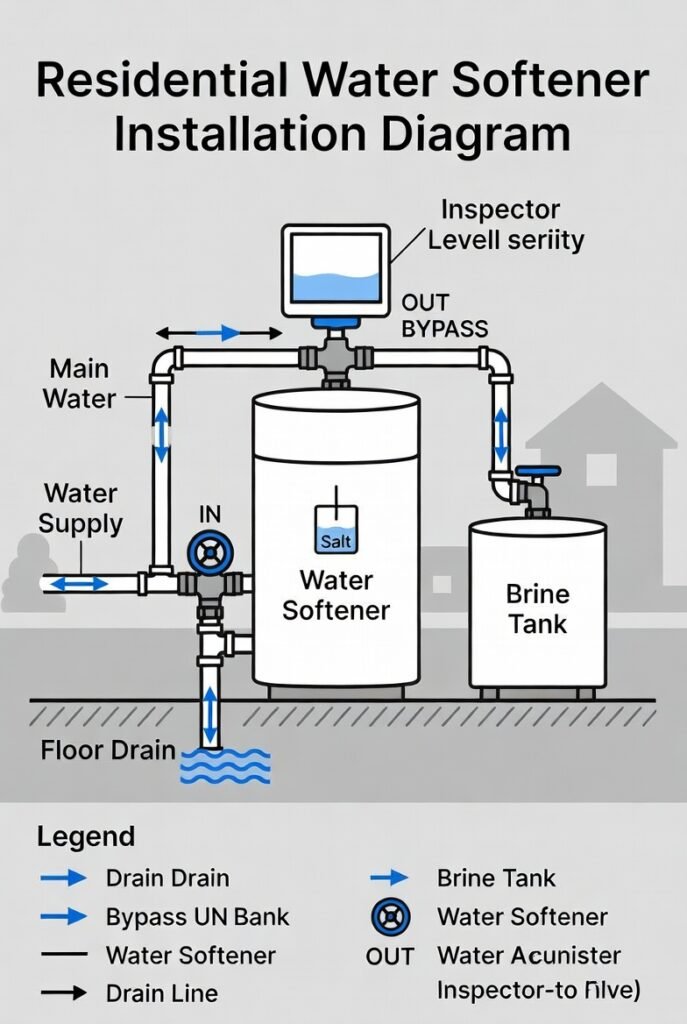
Residential Water Softener Installation Diagram (Inspector-Level Breakdown)
A residential water softener installation diagram is not just a drawing.
It is a pressure map. A flow control plan. A compliance checklist.
If one tee is placed before the bypass, if the drain line rises too high, or if the air gap is skipped, the system may:
- Allow untreated hard water into the home
- Lose pressure under demand
- Fail regeneration cycles
- Trigger backflow concerns
- Fail inspection during resale
This guide walks through the correct residential water softener plumbing layout line-by-line, exactly how an installer or inspector would trace it.
If you’re still selecting system size before plumbing begins, review proper sizing first:
👉 best water softener system
Standard Residential Water Softener Plumbing Order (Correct Flow Sequence)
Main Cold Water Flow Layout
- Main Water Supply (Municipal or Well)
- Main Shutoff Valve
- Sediment Pre-Filter (recommended, especially for well systems)
- Bypass Valve Assembly
- Softener Inlet (Hard Water)
- Resin Tank
- Softener Outlet (Softened Water)
- Cold Water Distribution to Home
- Water Heater (receives softened cold water)
The rule is simple:
All interior cold water should pass through the softener before branching — unless intentionally bypassed (e.g., outdoor hose bibs).
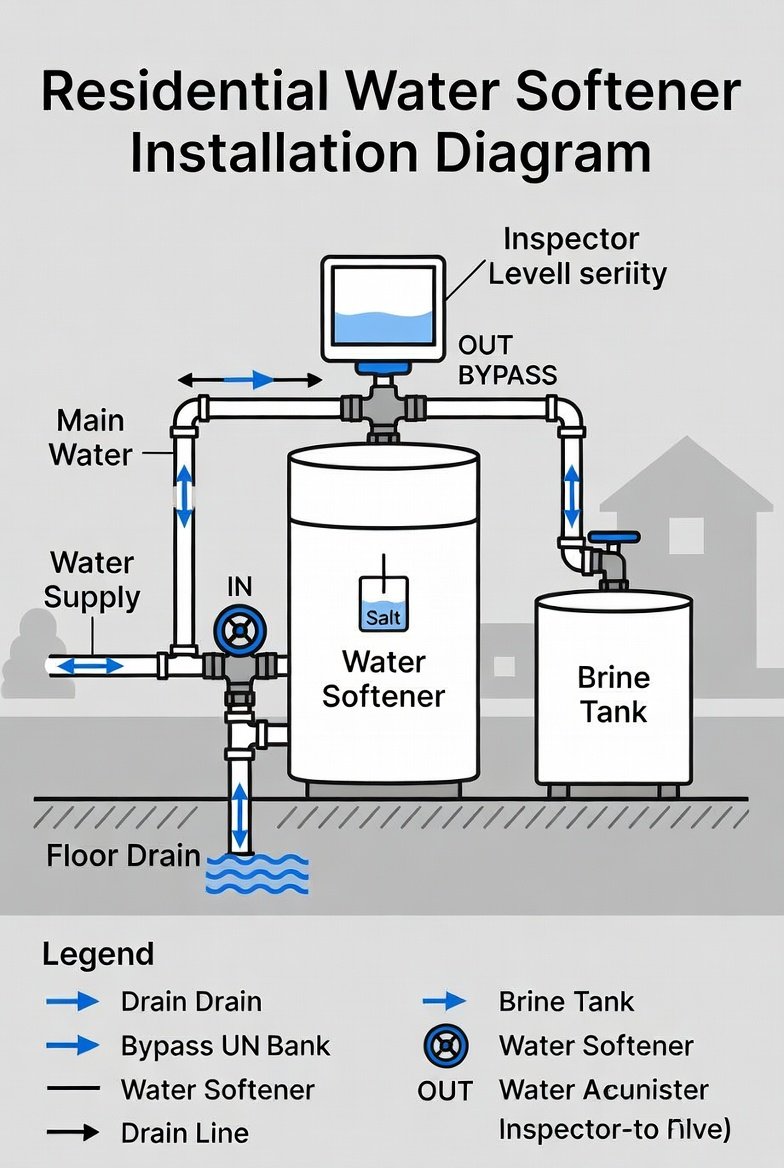
[VA IMAGE – PRIMARY DIAGRAM UPGRADED]
Image Title: Residential Water Softener Installation Diagram (Correct Plumbing Layout)
Required Callouts:
- “INLET – Hard Water”
- “OUTLET – Softened Water”
- Warning symbol: “Never Tee Before This Point”
- Drain Line → Air Gap → Standpipe
- Brine Tank Overflow → Separate Drain
- Color-coded “Flow Rate Zones” (blue gradient showing pressure movement)
Alt text:
“Residential water softener installation diagram with labeled inlet, outlet, bypass valve, drain line, air gap and water heater placement.”
Reading the Diagram Like a Plumber (Trace the Water Step-By-Step)
Start at the main shutoff.
From that valve, trace the cold water line forward.
The very first branch should feed the bypass inlet.
If you see a tee splitting off before the bypass valve, untreated hard water can permanently enter the home — even when the softener is in service mode.
This mistake defeats the entire system.
Water then enters the softener inlet labeled “Hard Water.” Inside the resin tank, calcium and magnesium ions attach to the resin beads. The softened water exits through the outlet port and flows into the home’s cold water distribution line.
From there:
- One branch feeds sinks and toilets
- One branch feeds the water heater
If the heater is installed before the softener, scale will continue forming inside heating elements and tank walls.
Correcting improper layout early prevents:
- Resin bed fouling
- Salt overuse
- Premature control valve wear
For a breakdown of professional installation expectations, see:
👉 water softener installation
Cold vs Hot Line Clarification (Common Plumbing Confusion)
A water softener treats the cold water line only.
Here’s how hot water becomes softened:
- Cold water enters softener.
- Softened cold water exits.
- That softened cold water feeds into the water heater.
- The heater warms already softened water.
- Hot taps deliver softened hot water.
You never pipe the softener separately into the hot line.
If both hot and cold were piped independently before treatment, the heater would still receive hard water — defeating protection.
Drain Line Layout (With Real-World Specs)
During regeneration, the softener flushes hardness minerals to a drain.
Typical Residential Drain Specifications
- Drain hose diameter: 1/2″ to 5/8″
- Maximum vertical lift: typically up to 8 feet (verify manufacturer specs)
- Avoid long horizontal runs beyond 20 feet
- Must terminate at an air gap
If vertical rise exceeds limits, regeneration flow weakens.
If horizontal runs are too long, backpressure increases.
Both conditions reduce cleaning efficiency inside the resin tank.
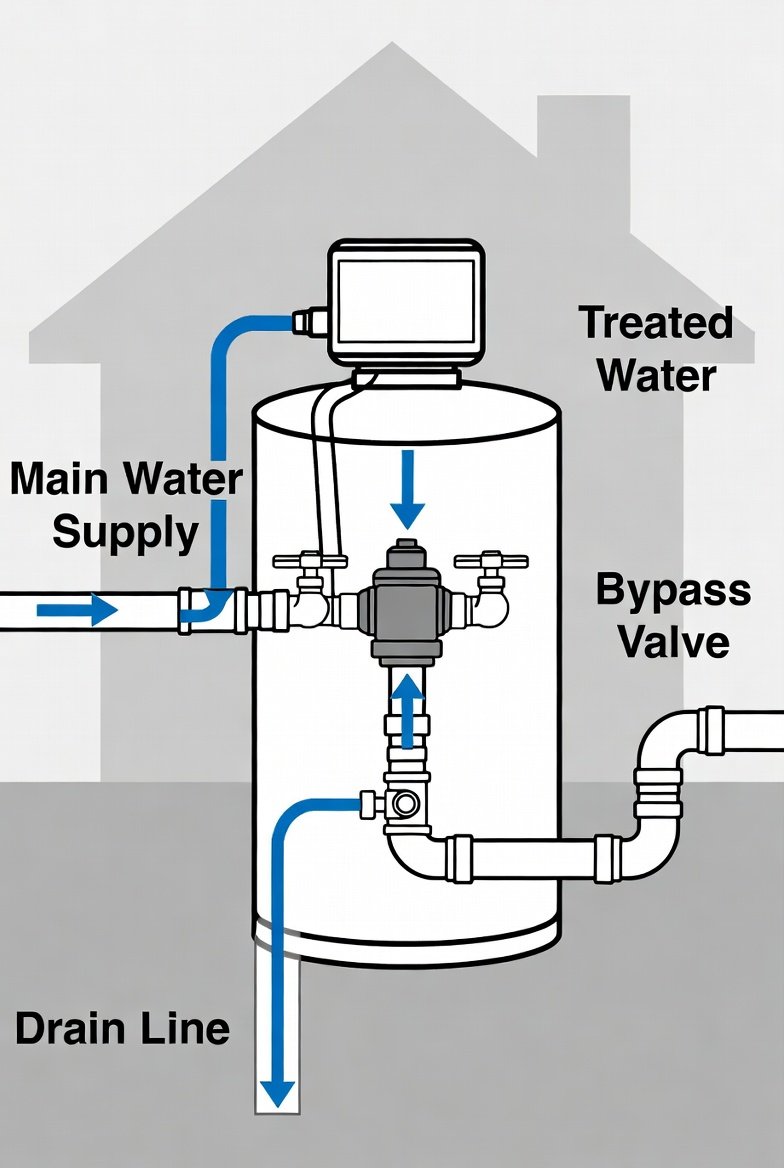
Correct Drain Routing
Softener Valve → Drain Hose → Air Gap → Standpipe or Floor Drain
Never:
- Submerge drain hose directly into sewer line
- Connect without air gap
- Use undersized hose diameter
Backflow protection is not optional in most jurisdictions.
Inspection & Code Reality (Why Layout Matters Beyond Performance)
Most plumbing inspections require:
- Air gap separation between drain hose and sewer
- Secure drain line anchoring
- Overflow line routing independent of main drain
- Proper backflow protection
In states like California and Texas, inspectors routinely check for submerged drain hoses and improper air gaps.
Florida resale inspections often flag improperly secured overflow lines.
Even if a system operates, a non-compliant layout can trigger correction requirements during property transfer.
Layout impacts:
- Inspection outcomes
- Insurance claims
- Future resale value
Plumbing configuration is not just performance — it is compliance.
Brine Tank Overflow Line (Separate Safety Channel)
The brine tank includes a secondary overflow port.
This line:
- Activates if float valve fails
- Must discharge to a drain
- Cannot tie directly into regeneration hose
Without it, brine overflow can flood finished spaces.
Municipal vs Well Water Diagram Differences
Municipal Supply Layout
City Line → Shutoff → Sediment Filter → Softener → House
Well Water Layout
Well Pump → Pressure Tank → Sediment Filter → (Iron Filter if needed) → Softener → House
The softener must be installed after the pressure tank.
Installing before the pressure tank causes unstable pressure cycling and regeneration errors.
Pipe Diameter & Flow Matching
Most homes use:
- 3/4″ supply lines
- 1″ supply lines
If pipe diameter reduces through the softener body, pressure drop increases during peak demand.
System must match:
- Household GPM demand
- Hardness level (grains per gallon)
- Occupant count
Improper sizing increases regeneration frequency and salt use.
Ownership impact explained here:
👉 water softener cost
Common Residential Installation Mistakes
- Inlet/outlet reversed
- Tee installed before bypass
- Drain hose submerged in sewer pipe
- Installing before pressure tank (well systems)
- No sediment filter on iron-heavy water
- Overflow line missing
- Outdoor install in freezing climates
Each of these shortens system lifespan.
System Boundaries (Critical Clarification)
A water softener does not remove:
- Chlorine
- Fluoride
- Heavy metals
- Bacteria
- High TDS
If contaminant removal beyond hardness is required, compare systems here:
👉water-softener-vs-reverse-osmosis
Understanding limits prevents misconfiguration.
Verification Checklist After Installation
✔ Flow arrows match water direction
✔ No tee before bypass inlet
✔ Drain line secured with air gap
✔ Overflow line routed separately
✔ Heater fed by softened water
✔ No leaks under pressure
✔ Hardness level programmed correctly
If these pass, the installation diagram has been executed properly.
FAQs
Where should a residential water softener be installed?
After the main shutoff valve and before the water heater so softened water feeds the home.
Is an air gap required for the drain line?
In most jurisdictions, yes. Air gaps prevent sewer backflow contamination.
How high can the drain line rise?
Most units allow around 8 feet of vertical lift. Always confirm manufacturer limits.
Does the softener treat hot water directly?
No. It treats cold supply water, which then feeds the heater.
Can outdoor hose bibs be softened?
They are often intentionally bypassed to reduce salt consumption.