
Water Softener System Cost: What You’ll Actually Pay (Real Price Breakdown)
Most homeowners start researching water softener system costs expecting a number.
What they actually need is context.
Because in this category, the sticker price is rarely the real price — and the cheapest system is often the most expensive decision five years later.
This guide is a price anchor: it explains where the money truly goes and prevents the costly mistake most homeowners make:
👉 Buying a system that doesn’t match their water.
Four Variables That Predict Cost
Water softener cost is almost entirely predictable once you know:
- Hardness level
- Household water usage
- System type
- Installation constraints
Everything else is noise.
Quick Cost Snapshot (Reality First)
System Type | Typical Installed Cost |
Single-tank salt-based softener | $1,000 – $2,500 |
Dual-tank / high-efficiency system | $2,500 – $4,500 |
Salt-free conditioner | $1,500 – $3,000 |
If a quote sits far outside these numbers, there is always a reason — sometimes justified, sometimes not.
The $3,000 Mistake Homeowners Make
The most expensive error is surprisingly simple:
👉 Sizing for fear instead of reality
Oversizing “just in case” leads to:
- Higher salt usage
- Inefficient regeneration
- More water waste
- No measurable performance gain
Bigger is not safer. Correct sizing protects your wallet long-term.
What Water Softener System Cost Actually Includes
Buyers often collapse three separate expenses into one number. Don’t. Always separate:
1️⃣ Equipment cost
2️⃣ Installation cost
3️⃣ Ownership cost
Ignoring any one makes comparison meaningless.
1. Equipment Cost (The Softener Itself)
Single-Tank Salt-Based Systems
- Typical price: $600 – $1,500
- Lower prices → smaller resin, basic valves
- Higher prices → larger capacity, better efficiency, durable valves
Dual-Tank / High-Efficiency Systems
- Typical price: $1,500 – $3,000
- Two tanks, continuous soft water, advanced regeneration logic
- Often zero practical advantage for average households
Salt-Free Conditioners
- Typical price: $1,000 – $2,500
- Do not remove hardness minerals
- Scale reduction only, results vary by water chemistry
Many buyers assume salt-free is cheaper — it’s a different tool for different needs.
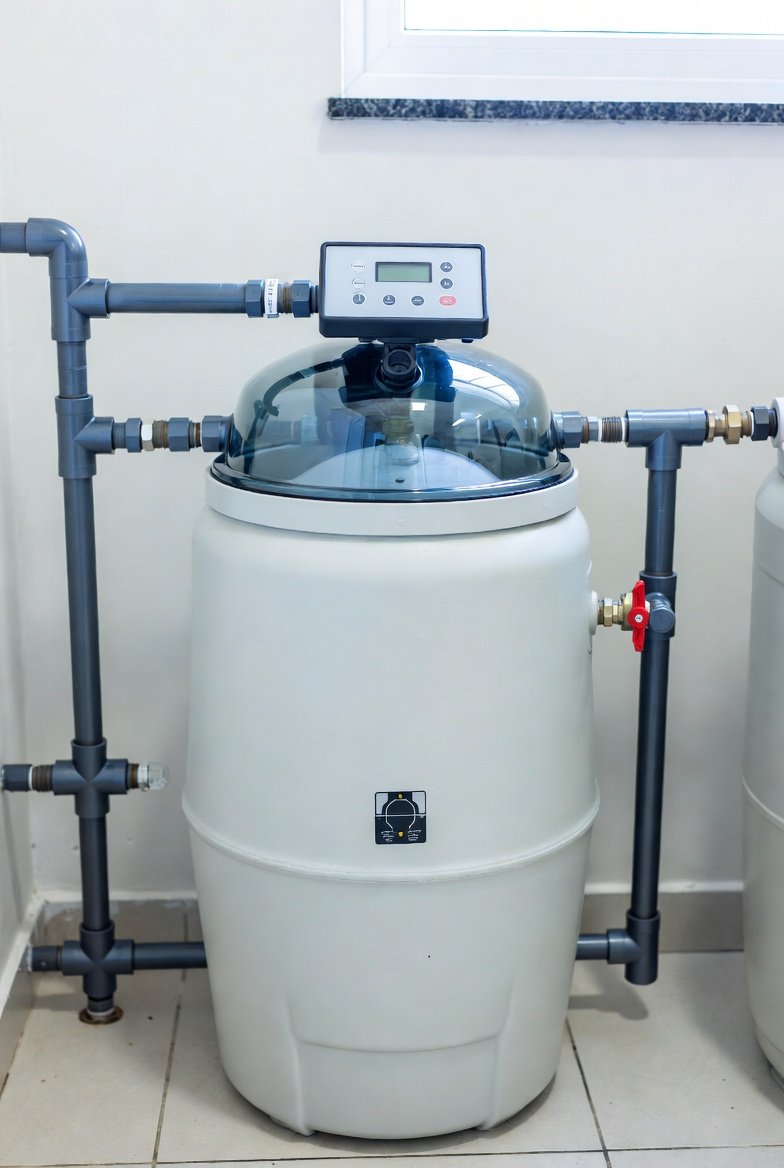
2. Installation Cost — Where Prices Spread Fast
Typical range: $400 – $1,500+
Factors that drive cost:
- Access to main water line
- Drain availability
- Electrical proximity
- Tight utility spaces
- Removal of older equipment
- Permit requirements
- Local labor rates
Same system, very different install cost.
Total Installed Cost (Most Homeowners Actually Pay)
System | Realistic Installed Cost |
Single-tank salt system | $1,000 – $2,500 |
Dual-tank system | $2,500 – $4,500 |
$1,500 – $3,000 |
3. Ownership Cost — The Quiet Expense
Salt Costs
- Typical bag: $5–$10
- Usage: 1–3 bags/month
- Annual cost: $60–$200 (harder water increases usage)
Water Used During Regeneration
- Efficient modern softeners minimize waste
- Still part of the real operating cost
Maintenance & Lifespan
- Occasional brine tank cleaning
- Resin: 10–15 years
- Valve life: long if properly configured
Common Mistakes That Raise Lifetime Cost
- Undersized → regenerates constantly, wears faster
- Oversized → wastes salt and water
5-Year and 10-Year Reality
Average household:
- Installed system → ~$1,800
- Salt + minor upkeep → ~$150/year
5-year total: ~$2,550
10-year total: ~$3,300
A poorly sized system quietly costs more through excess salt and premature wear.
Why Water Softener Prices Vary So Much
Four main variables:
- Water Hardness → harder water → larger system → higher cost
- Household Water Usage → more gallons → bigger tanks, more regeneration
- System Type → dual-tank solves downtime, not better softening
Control Valve Quality → affects efficiency, salt usage, reliability
Where People Accidentally Overpay
- Doubling capacity “just to be safe”
- Buying dual-tank unnecessarily
- Expecting salt-free to behave like true softening
- Accepting unexplained installation costs
The most expensive softener is the one that fails to solve the real problem.
When Softener Cost Includes Additional Systems
Some homes benefit from combination systems:
- Water softener + under-sink reverse osmosis → protects infrastructure, improves drinking water
- Water softener + whole-house carbon filter → hardness handled, chlorine taste reduced
Not upselling — structural clarity.
Cost Comparison — At a Glance
System Type | Installed Cost | Removes Hardness | Ongoing Cost | Best Fit |
Salt-Based Softener | $1,000–$2,500 | ✅ Yes | Moderate | Most hard-water homes |
Dual-Tank Softener | $2,500–$4,500 | ✅ Yes | Moderate | Large / high-use homes |
Salt-Free Conditioner | $1,500–$3,000 | ❌ No | Low | Mild hardness only |
The Calm System Test (Preventing Regret)
The best water softener should feel boring after installation.
- Predictable
- Efficient
- Quiet
- No surprise costs
- No performance drama
Water treatment should disappear into the background of your home.
Bottom Line
Water softener system cost is not just a number — it is a structure.
What you actually pay depends on:
✔ Hardness level
✔ Household usage
✔ System type
✔ Installation constraints
✔ Long-term maintenance
For most homes, a properly sized salt-based system in the $1,000–$2,500 installed range solves the problem cleanly.
Spending more only makes sense when it solves a real, measurable constraint.
Clarity — not complexity — prevents overpaying.