
Water Conditioning System (What It Covers — and What It Doesn’t)
The term water conditioning system is one of the most misunderstood phrases in residential water treatment.
Some companies use it to describe salt-free anti-scale systems.
Others use it broadly to include traditional water softeners.
Some use it as a marketing umbrella for any water improvement device.
If you don’t clarify the scope first, you buy the wrong system.
This guide explains:
- What a water conditioning system actually covers
- What it does not cover
- The different types of conditioning systems
- Where it fits in your plumbing
- How to verify it’s working
- When it must be paired with other treatment
If you’re deciding what to install, start with the decision framework here:
👉best-water-conditioning-system
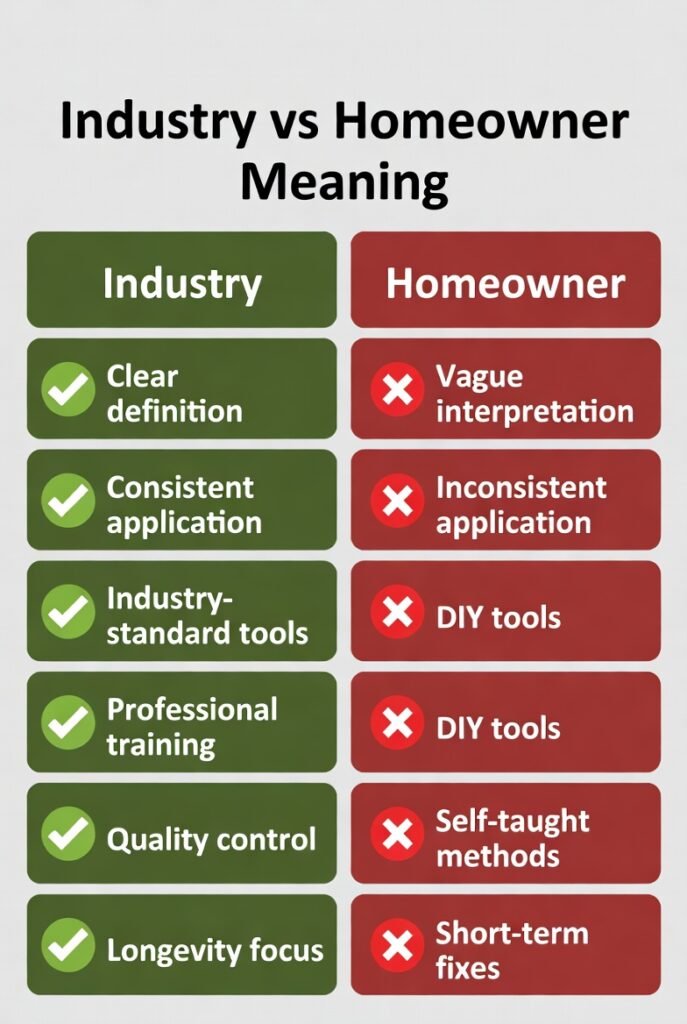
Definition Lock (Industry Meaning vs Homeowner Meaning)
Industry Meaning
Water conditioning refers to any process that improves water quality for a specific purpose.
That can include:
- Softening
- Scale control
- Filtration
- Carbon treatment
- Even pH adjustment
Homeowner Meaning
In most residential marketing, water conditioner usually refers to a salt-free anti-scale system — not a true hardness-removing softener.
Here’s the key translation:
If you want water to feel soft and test lower in hardness, you’re describing softening — not salt-free conditioning.
If that distinction isn’t clear, read:
👉saltless-water-softener-vs-conditioner
What a Water Conditioning System Covers
Depending on the type, conditioning can address:
✅ Scale Reduction
Salt-free systems change how calcium crystallizes so it adheres less aggressively to surfaces.
✅ Appliance Protection (Moderate)
Reduces heavy internal buildup in heaters and plumbing (but does not remove hardness minerals).
✅ Chlorine & Taste (If Carbon Included)
Many conditioning systems integrate carbon media for odor and taste improvement.
✅ Whole-House Entry Protection
Installed at the main line, conditioning protects plumbing downstream.
✅ Flow Stability Over Time
Less aggressive scale formation helps maintain internal pipe diameter longer.
What a Water Conditioning System Does NOT Cover
This is where expectations fail.
A typical salt-free conditioner does NOT:
- Remove hardness minerals (GPG reading remains the same)
- Produce soft-water feel
- Remove iron
- Remove bacteria
- Remove nitrates or fluoride
- Lower total dissolved solids
For dissolved contaminant removal comparisons, see:
👉water-softener-vs-reverse-osmosis
Conditioning is not universal treatment.
Types of Water Conditioning Systems
1️⃣ Salt-Free Conditioner (TAC / Anti-Scale)
- Alters scale crystal formation
- No salt
- No regeneration
- Best below ~12–15 GPG
Low maintenance, moderate protection.
2️⃣ Ion-Exchange Water Softener
Technically a form of conditioning — but it removes hardness.
- Exchanges calcium/magnesium for sodium
- Reduces GPG reading
- Requires salt
Cost overview here:
👉water-softener-system-cost
3️⃣ Carbon Filtration System
- Removes chlorine
- Improves taste and odor
- Does not remove hardness
Often paired with conditioners or softeners.
4️⃣ Reverse Osmosis (Point-of-Use)
- Reduces dissolved solids
- Targets fluoride, nitrates, and other contaminants
- Installed under sink
Not a whole-house conditioner.
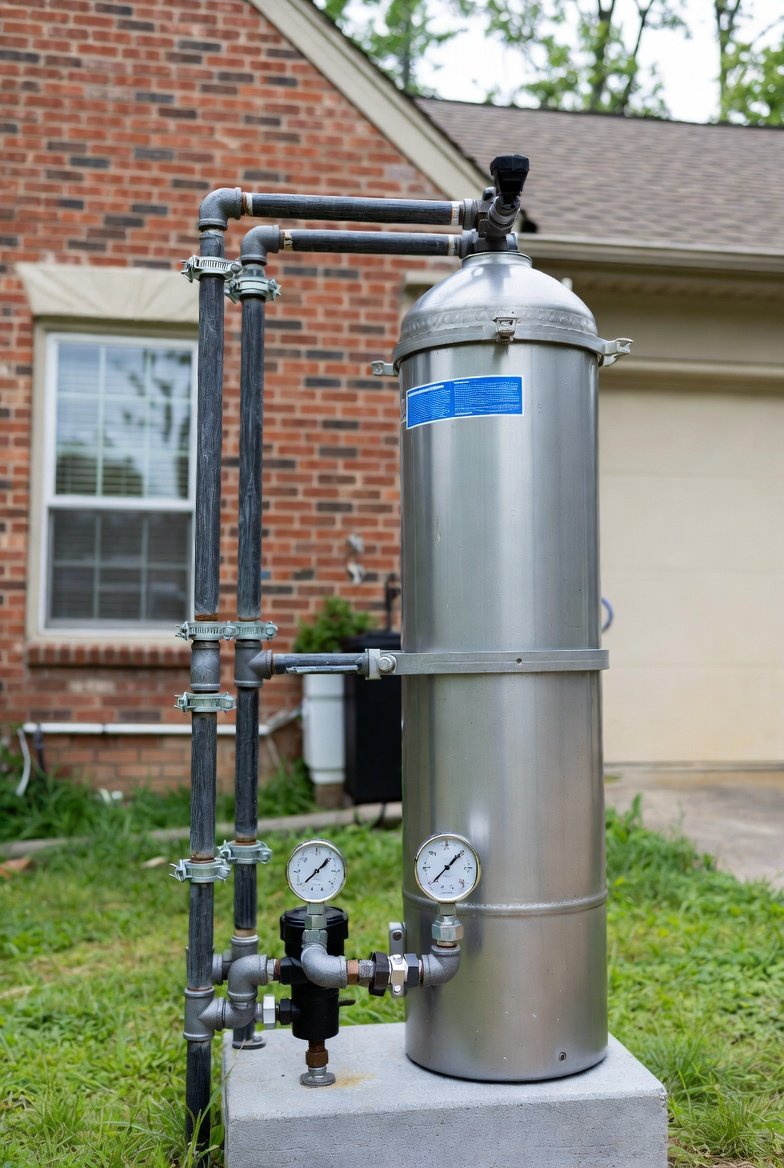
What’s Inside a Whole-House Conditioning System
Most properly installed systems include:
- Main shutoff valves
- Bypass valve
- Sediment pre-filter
- Media tank (TAC or resin)
- Control head (for softeners)
- Drain line (softeners only)
- Optional carbon stage
Missing these components can compromise performance.
Where It Sits in the Plumbing (Trace the Water)
Main Line → Sediment Filter → Iron Filter (if needed) → Conditioner/Softener → Water Heater → Branch Lines → RO (under sink)
Critical placement rules:
- Iron filtration must occur before conditioning.
- Conditioner must be before the water heater.
- RO should be fed from conditioned/softened water to protect the membrane.
Installer red flags:
- Tee before conditioner (hard water bypass)
- Iron filter after conditioner (media fouling risk)
- RO on unsoftened hard water (membrane scaling)
Correct placement prevents premature system failure.
Cold vs Hot Line Clarification
Conditioning typically treats incoming cold water.
That conditioned cold water feeds the heater.
Hot water becomes conditioned indirectly because the heater receives treated supply.
Problem → System Matrix
Problem | Best System | Notes |
Hard water scale | Softener | Removes minerals |
Mild scale | Salt-free | Low maintenance |
Iron staining | Iron filter first | Prevents fouling |
Chlorine taste | Carbon | Often integrated |
Fluoride | RO | Drinking water only |
Bacteria | UV | Post-filtration |
No single system solves every category.
How to Verify It’s Working
Different systems verify differently.
Softener:
- Hardness test strip drops
- Soap lather improves
- Spotting reduces
Salt-Free Conditioner:
- Hardness test does NOT change
- Scale buildup reduces gradually
- Heater scaling slows
Carbon Filter:
- Chlorine taste/odor improves immediately
RO System:
- TDS drops at drinking faucet
Understanding verification prevents false assumptions.
When Conditioning Won’t Fix the Problem
Conditioning alone is insufficient when:
- Hardness exceeds ~15–18 GPG
- Iron is present in well water
- You want measurable soft water feel
- You need dissolved contaminant reduction
In those cases, pairing systems is required.
Cost Expectations (Quick Anchor)
Typical installed ranges:
- Salt-free conditioner: ~$1,000–$3,000
- Softener: ~$1,200–$3,500+
- RO add-on: additional investment
Cost should follow water chemistry — not marketing claims.
Point of No Return (Damage Progression)
Stage 1: Spotting
Stage 2: Heater scale buildup
Stage 3: Reduced flow & efficiency
Stage 4: Component failure
Early conditioning slows escalation.
Who Should Use a Salt-Free Conditioner
- Hardness below ~12 GPG
- No iron
- Want minimal maintenance
- No desire for soft-water feel
Who Needs a Softener Instead
- Hardness above 15 GPG
- Severe spotting
- Tankless heaters
- Desire for softer skin feel
Decision framework recap:
👉best-water-conditioning-system
FAQs
Is a water conditioner the same as a water softener?
Not always. Salt-free conditioners reduce scale behavior; softeners remove hardness minerals.
Does a water conditioning system remove iron?
No. Iron filtration must occur before conditioning.
Will my water feel soft with a salt-free system?
Usually not. Hardness minerals remain present.
Does conditioning remove chlorine?
Only if carbon media is included.
Does conditioning remove fluoride?
No. Reverse osmosis is required.
Is conditioning worth it in mild hardness areas?
Yes, especially for scale prevention without salt maintenance.
Do I need a plumber to install a conditioner?
Professional installation ensures correct placement and bypass configuration.
How long until results are noticeable?
Carbon improvements are immediate. Scale reduction with salt-free systems may take several weeks.