
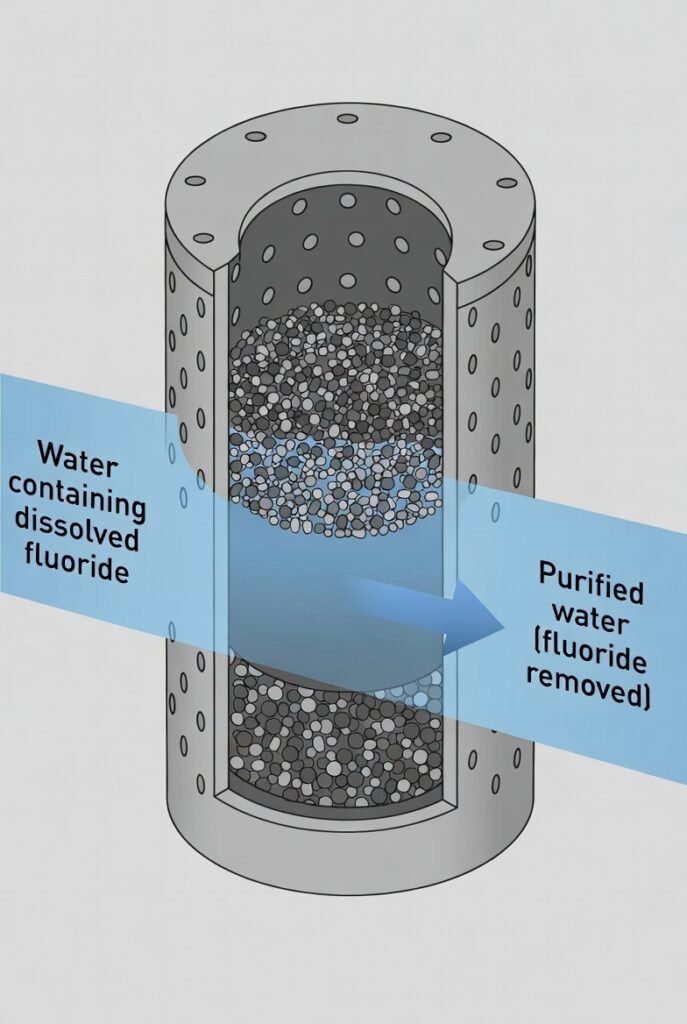
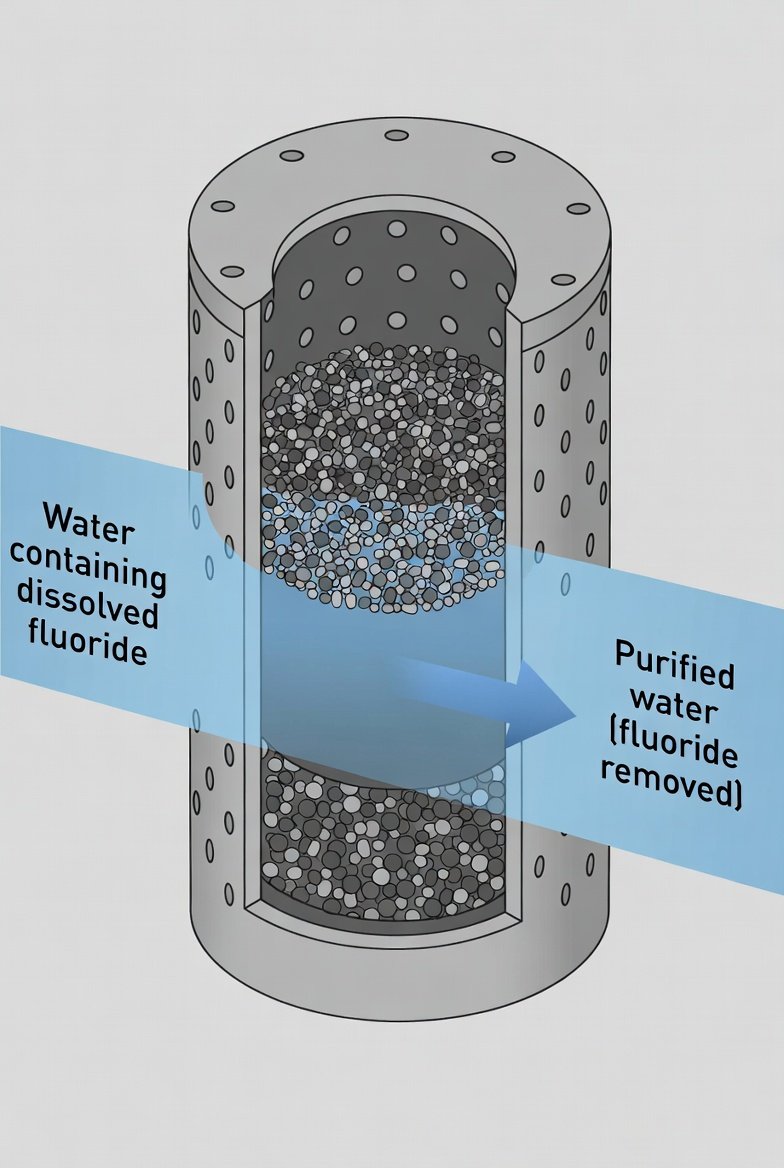
Do Whole House Water Filters Remove Fluoride?
If you installed a whole-house water filter expecting fluoride removal, you likely aren’t getting it.
Short answer: No — most whole house water filters do not remove fluoride.
And the reason isn’t marketing.
It’s chemistry.
To understand why, you have to understand what fluoride actually is in water — and how filtration works.
Why Most Whole-House Systems Don’t Remove Fluoride
Most whole-house systems (also called Point-of-Entry or POE systems) use:
- Sediment filtration
- Activated carbon
These systems are excellent for:
- Chlorine
- Taste and odor
- Rust particles
- Organic compounds
But fluoride behaves very differently.
Fluoride Is a Dissolved Ion — Not a Particle
Fluoride in water exists as a dissolved ion (F⁻).
That means:
- It is not a solid particle.
- It cannot be strained out by sediment filters.
- It does not reliably bind to standard activated carbon.
Carbon works extremely well for chlorine because chlorine is reactive and easily reduced through adsorption.
Fluoride is stable and dissolved.
Different chemistry → different treatment method.
If you’re trying to understand the difference between structural filtration and dissolved contaminant removal, see:
👉water-conditioning-system
That page explains how various systems handle different contaminant types.
Regulatory Context (Neutral, Not Alarmist)
In the United States, the Environmental Protection Agency (EPA) sets:
- Maximum Contaminant Level (MCL): 4.0 mg/L
- Secondary standard: 2.0 mg/L
Municipal water systems must remain below the primary MCL.
Before installing any fluoride removal system, you should:
- Review your local Consumer Confidence Report.
- Test your water independently (especially for private wells).
- Confirm your actual fluoride level.
Treatment should follow measurement — not assumption.
What Actually Removes Fluoride
Now let’s talk about what does work.
1. Reverse Osmosis (RO)
Reverse osmosis uses a semi-permeable membrane to remove dissolved ions.
It reduces:
- Fluoride
- Nitrates
- Dissolved solids
- Many other ionic contaminants
RO is typically installed under a sink as a Point-of-Use (POU) system.
If you’re comparing full-house vs drinking-water treatment approaches, read:
👉whole-house-water-filter-vs-reverse-osmosis
That article breaks down POE vs POU design differences clearly.
2. Activated Alumina
Activated alumina can adsorb fluoride under controlled conditions.
However:
- It requires proper pH.
- It requires adequate contact time.
- It requires controlled flow rate.
- It requires ongoing media replacement.
At normal household demand (10–15 GPM), tanks must be significantly oversized to ensure enough contact time.
Most off-the-shelf whole-house carbon systems do not meet these engineering requirements.
3. Bone Char Media
Bone char can reduce fluoride in certain setups.
But like activated alumina:
- It is flow-sensitive.
- It requires careful sizing.
- It is usually installed at point-of-use rather than whole-house scale.
Fluoride Removal Comparison Table
Technology | Scale | Removes Fluoride? | Real-World Practicality |
Sediment Filter | Whole House | ❌ No | Removes particles only |
Activated Carbon | Whole House | ❌ No | Removes chlorine & odor |
Reverse Osmosis | Under Sink | ✔ Yes | Most practical residential solution |
Activated Alumina | Engineered Whole House | ✔ Yes | Requires proper design |
Whole-House RO | Entire Home | ✔ Yes | Rare, complex, expensive |
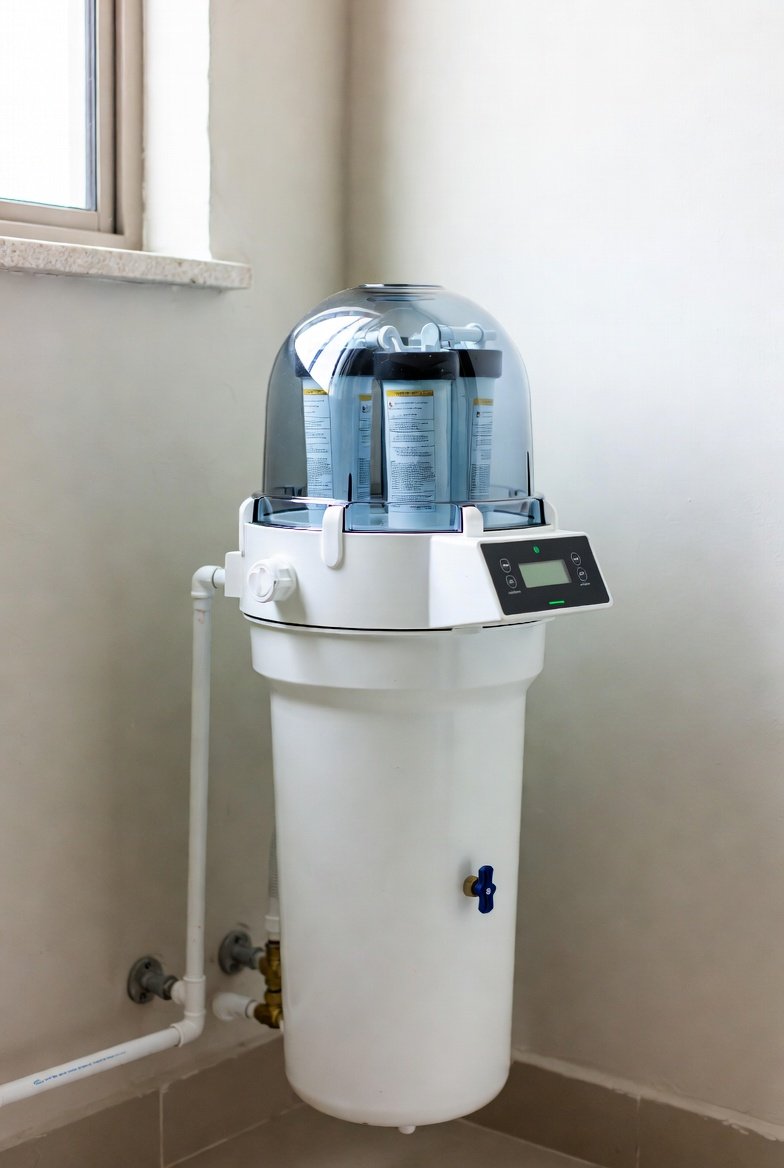
Whole-House vs Drinking-Water Strategy
Many homeowners assume:
“If fluoride is in my water, I need to remove it from the whole house.”
In practice, most fluoride exposure concerns relate to ingestion.
That means:
- Drinking water
- Cooking water
In those cases, installing RO at the kitchen tap is often sufficient.
Whole-house carbon handles chlorine and sediment.
RO handles dissolved ions.
If you’re trying to decide between system types for your entire plumbing line, review:
👉water-filter-for-entire-house
That guide focuses on structural filtration placement.
Common Homeowner Mistakes
Mistake #1 — Assuming Carbon = “Removes Everything”
Carbon improves taste dramatically.
So homeowners assume it removes all chemicals.
It doesn’t remove dissolved fluoride ions.
Mistake #2 — Installing Oversized Carbon Tanks for Fluoride
More carbon does not equal fluoride removal.
The chemistry is wrong.
You need ion-specific removal media or membrane separation.
Mistake #3 — Skipping Water Testing
Private wells vary widely by region.
Testing determines need.
If you’re evaluating cost before committing to a system, see:
👉whole-house-water-filtration-system-cost
That page breaks down realistic installation budgets.
Does Whole-House Fluoride Removal Ever Make Sense?
It can — but rarely.
It may make sense if:
- Fluoride levels are significantly elevated.
- You want full-home ion reduction.
- A properly engineered activated alumina system is installed.
- You understand maintenance requirements.
These are engineered systems — not typical retail installs.
Myths Clarified
Does boiling remove fluoride?
No. Boiling does not remove fluoride.
Do refrigerator filters remove fluoride?
Most standard refrigerator carbon filters do not remove fluoride.
Does showering require fluoride removal?
Most treatment decisions prioritize ingestion, not external exposure.
Quick Summary
- Whole-house carbon does not remove fluoride.
- Fluoride is a dissolved ion.
- Reverse osmosis is the most practical residential solution.
- Whole-house fluoride removal requires engineered specialty media.
- Testing should guide decisions.
FAQs
Do carbon filters remove fluoride?
No. Standard activated carbon filters do not reliably remove fluoride.
Does reverse osmosis remove fluoride?
Yes. Reverse osmosis membranes effectively reduce fluoride.
Can I install RO for my entire house?
Whole-house RO systems exist but are rare and complex. Most homes use point-of-use RO.
I have 2.5 mg/L fluoride in my well. Can my existing whole-house system handle it?
No. Carbon will not reliably reduce fluoride. Consider RO or engineered alumina media.
Is fluoride removed by sediment filters?
No. Sediment filters remove particles, not dissolved ions.
What is the most practical way to reduce fluoride?
For most homes, point-of-use reverse osmosis at the kitchen tap is the practical solution.