
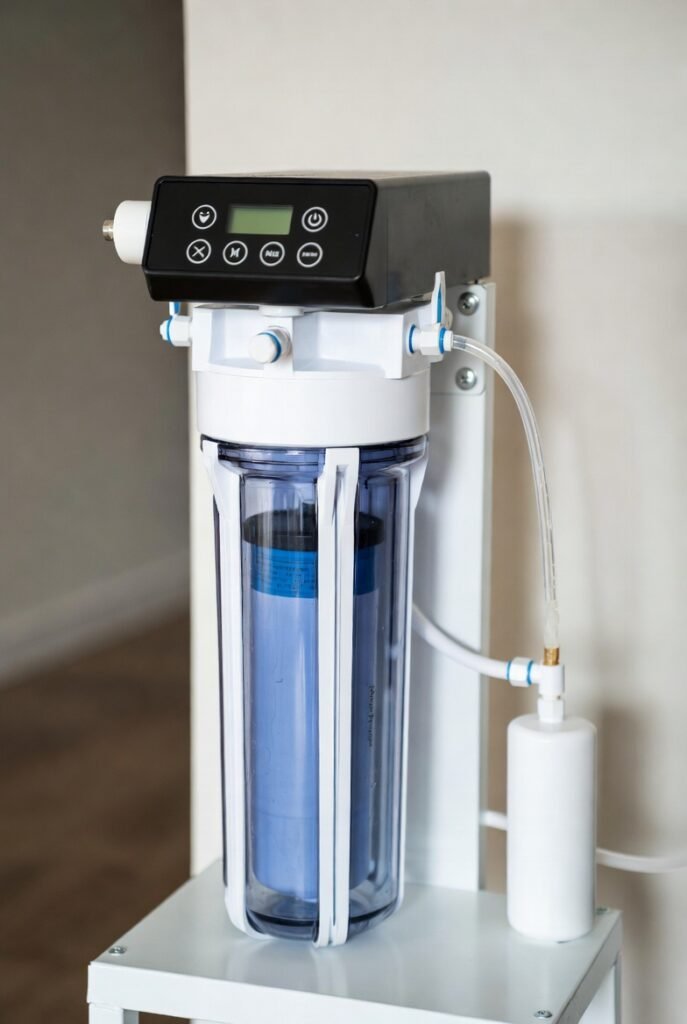
Reverse Osmosis Water Softener: What It Is (and What It Isn’t)
There is no such thing as a reverse osmosis water softener.
Not technically.
Not functionally.
And not in the way most homeowners mean it.
Yet thousands of buyers search this phrase every month — usually after noticing scale on fixtures, cloudy dishes, dry skin, stiff laundry, or appliances that seem to age faster than expected.
The confusion is understandable. Both systems improve water. Both reduce minerals in some form. Both get recommended in conversations about “better water.”
But they solve completely different problems.
Understanding that boundary is what prevents one of the most expensive mistakes in residential water treatment.
The Two-Problem Reality Most Homes Face
Nearly every homeowner researching this topic is dealing with one — or both — of these issues:
Hardness behavior
Scale buildup, soap that refuses to lather, mineral spots, appliance wear.
Drinking-water quality
Taste concerns, dissolved contaminants, uncertainty about what’s actually coming from the tap.
These are separate engineering problems.
👉 Hardness behavior → Water softener
👉 Drinking-water purity → Reverse osmosis
If both problems exist, the solution is not a hybrid device — it’s two systems with two roles.
Clarity here prevents overspending later.
Reverse Osmosis vs Water Softener — At a Glance
Household Problem | Reverse Osmosis | Water Softener |
Drinking-water purification | ✅ Yes | ❌ No |
Hardness / scale control | ❌ No | ✅ Yes |
Appliance protection | ❌ No | ✅ Yes |
Whole-home treatment | ❌ No | ✅ Yes |
Soap performance | ❌ No | ✅ Yes |
Mineral reduction at faucet | ✅ Yes | ❌ Not its purpose |
This table alone resolves most buying confusion.
Reverse osmosis improves what you ingest.
A softener improves how water behaves everywhere else.
What a Water Softener Actually Does
A traditional water softener performs one task exceptionally well:
It removes calcium and magnesium through ion exchange.
Those minerals are not dangerous to drink — but they are destructive to plumbing systems over time.
Hard water commonly causes:
- Scale inside pipes
- Reduced water heater efficiency
- Appliance wear
- White residue on fixtures
- Poor detergent performance
A softener swaps hardness minerals with sodium or potassium ions, preventing scale formation and stabilizing water behavior throughout the home.
Important Boundary
A water softener does not purify water.
It does not remove most dissolved contaminants.
It does not function as a drinking-water safety system.
Think of it as infrastructure protection, not purification.
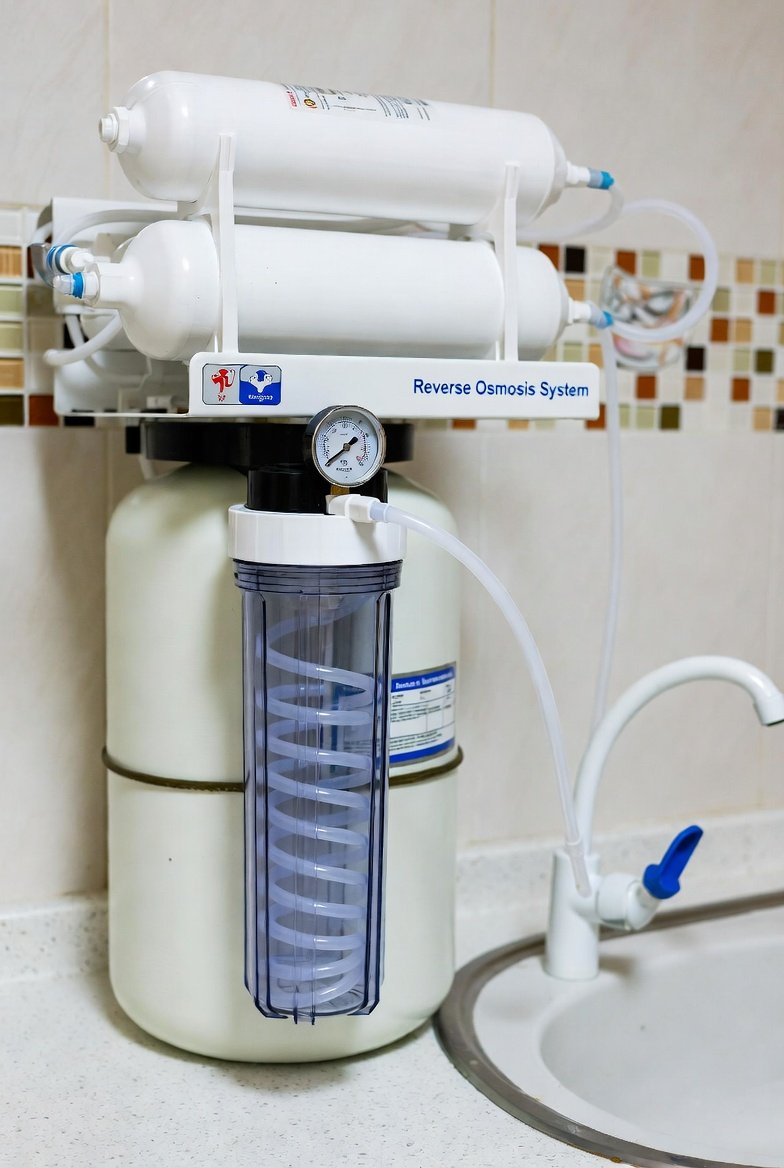
What Reverse Osmosis Actually Does
Reverse osmosis is a precision filtration process designed for ingestion — not household plumbing protection.
An RO system pushes water through a semi-permeable membrane that reduces a wide range of dissolved substances.
In most homes:
- It sits under one sink
- Produces limited daily volume
- Supplies drinking and cooking water
It does not treat shower water.
It does not protect appliances.
It does not control scale across the home.
RO improves what enters your body — not what flows through your pipes.
Why Reverse Osmosis Gets Mistaken for a Softener
Three forces create this misunderstanding:
1. RO Water Tastes “Lighter”
Lower mineral content can feel similar to softened water when drinking it.
2. RO Removes Hardness — But Only at One Tap
Yes, calcium and magnesium are reduced.
But only in the few gallons the system produces each day.
Meanwhile, the other 99% of household water remains untreated.
3. Marketing Shortcuts
Some sellers casually say RO “softens” water because minerals are reduced — skipping the functional distinction entirely.
That shortcut language often leads to expensive expectations.
What Reverse Osmosis Does NOT Do
Installing RO alone will not stop:
- Scale on fixtures
- Appliance wear
- Soap inefficiency
- Mineral spotting
- Pipe buildup
- RO vs Distilled water
Real-World Example
In a family home with hard water, an under-sink RO system might generate several gallons per day.
But hundreds of gallons still flow through showers, washing machines, toilets, and pipes.
The drinking water improves.
The house stays hard.
This is where post-install regret often begins.
The $3,000 Mistake Many Homeowners Make
A common pattern looks like this:
- Install reverse osmosis hoping it fixes scale
- Discover hardness problems remain
- Install a softener afterward
- Water conditioner vs water softner
Now the homeowner has paid for two major systems — when starting with the correct diagnosis would have avoided unnecessary cost escalation.
The mistake isn’t buying both.
The mistake is buying them in the wrong order, driven by misunderstanding.
Does Reverse Osmosis Soften Water at All?
Only at the faucet.
The water leaving an RO tap is typically very low in hardness minerals — technically “soft.”
But household water is measured in total flow, not drinking volume.
Calling RO a water softener in the residential sense is misleading because it does nothing for system-wide hardness.
The Overlooked Maintenance Consequence
Hard water feeding directly into an RO system creates hidden stress.
Hardness minerals accelerate membrane fouling, which can lead to:
- Reduced efficiency
- Higher reject water
- More frequent replacements
- Rising operating costs
Many installers recommend softening upstream when hardness is elevated.
In real-world installations, softened feed water often extends membrane life significantly and reduces long-term maintenance pressure.
The benefit shows up gradually — in reliability, not marketing claims.
Can You Install Both Without Over-Treating Water?
Yes — and when both problems exist, this is often the rational setup.
Correct order matters:
👉 Water softener first → protects plumbing and stabilizes feed water
👉 Reverse osmosis second → purifies drinking water
This sequence:
- Protects the RO membrane
- Improves system longevity
- Prevents redundant treatment
- Keeps operating costs predictable
It isn’t about buying more equipment.
It’s about matching each tool to its job.
Where Buyers Get Overwhelmed (and How to Stay Clear)
Search results often lump multiple technologies together:
- Water softeners
- Salt-free conditioners
- Whole-house filters
- Reverse osmosis
Here is the clean separation:
Water Softener
Removes hardness minerals. Whole-home protection.
Salt-Free Conditioner
Reduces scale behavior but does not remove minerals.
Whole-House Filter
Improves taste and odor — often chlorine — but does not soften or purify to RO levels.
Reverse Osmosis
High-precision purification for drinking water only.
Once these boundaries are visible, decisions become dramatically simpler.
The Decision Test That Prevents Regret
Ask two questions:
1. Is my problem about scale, soap, and appliance wear?
→ Choose a water softener.
2. Is my concern about what I’m drinking?
→ Choose reverse osmosis.
If both answers are yes, a combined setup is logical — not excessive.
Precision beats guesswork every time.
Bottom Line
A “reverse osmosis water softener” isn’t a real category in the way most people imagine.
Water softeners manage hardness across the home.
Reverse osmosis purifies drinking water at a single point.
Trying to force one system to replace the other usually leads to wasted money, higher maintenance, or unresolved problems.
The smartest water-treatment decisions aren’t built on complexity.
They’re built on clarity.