
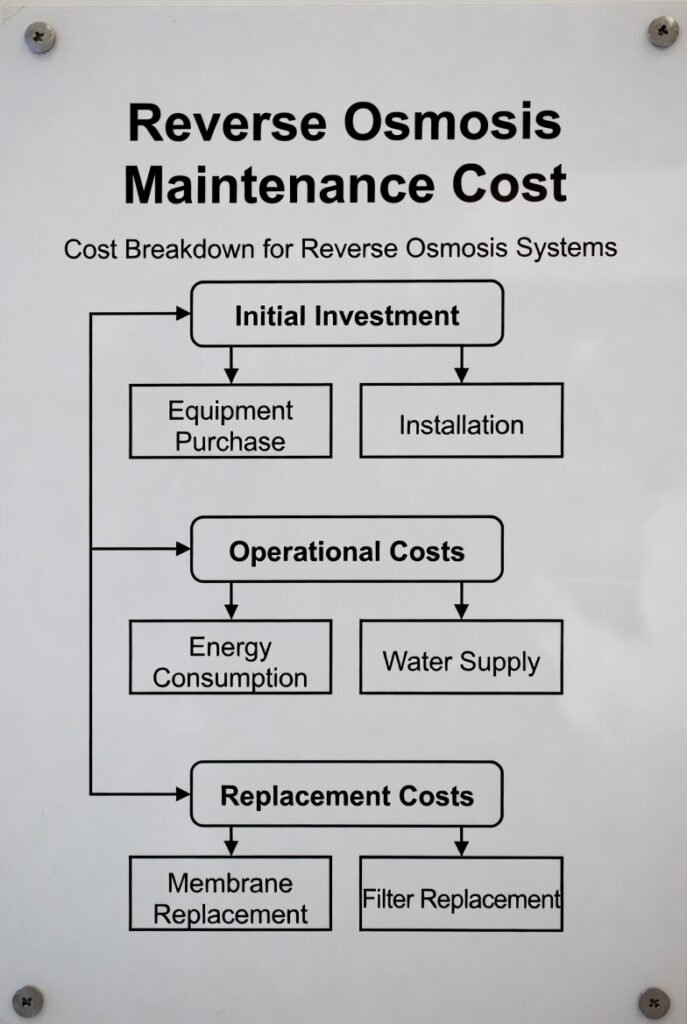
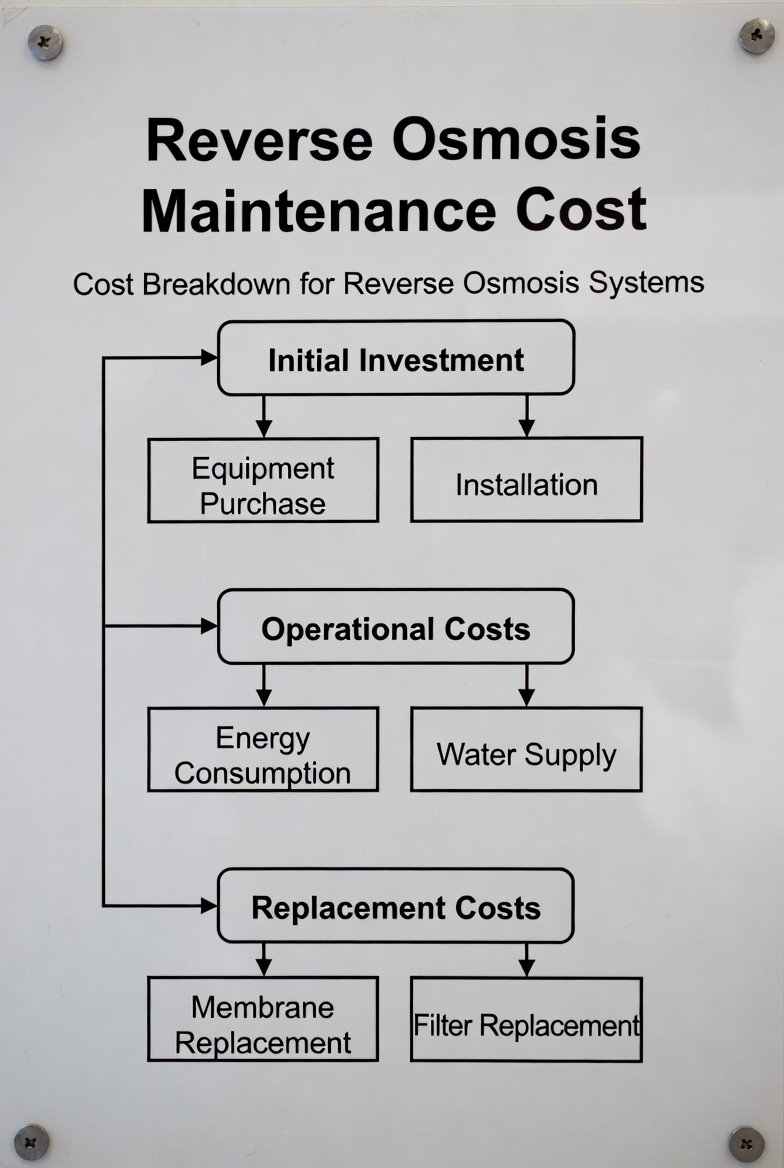
Reverse Osmosis Maintenance Cost: What It Really Takes to Keep an RO System Healthy
Reverse osmosis maintenance cost almost never feels expensive at the beginning.
It feels optional.
Postponable.
Easy to “handle later.”
That assumption is exactly where ownership quietly becomes costly.
Reverse osmosis systems are engineered for durability, but they rely on consumable components designed to wear out so the system itself doesn’t. When those components are replaced on schedule, costs remain predictable. When they are ignored, small upkeep turns into sudden, high-impact replacements that homeowners rarely see coming.
Most expensive RO systems are not oversized.
They are neglected.
Understanding what maintenance actually involves — and what causes costs to spike — is what keeps this technology affordable over the long term.
Quick Reality Check — Maintenance Is the Ownership Phase
For most homes, reverse osmosis maintenance is neither complicated nor constant.
Costs stay controlled when three conditions are met:
- The system is properly sized
- Standard replacement components are used
- Maintenance schedules are respected
Costs tend to climb when:
- Filters are skipped
- Proprietary cartridges lock pricing
- The system is pushed beyond its design role
Verify: If RO ownership suddenly feels expensive, the root cause is often deferred maintenance rather than equipment failure.
What “Maintenance” Actually Means — And What It Doesn’t
Residential RO upkeep is less technical than many buyers expect.
In most homes, maintenance primarily involves replacing sacrificial components that protect the core filtration system.
Typical Maintenance Tasks
- Replacing sediment filters
- Changing carbon pre-filters
- Replacing post-filters
- Periodic membrane replacement
- Occasional leak or pressure checks
What Maintenance Usually Does NOT Require
- Monthly service visits
- Specialized diagnostic tools
- Frequent recalibration
Well-maintained systems tend to be uneventful — and uneventful ownership is the goal.
Typical Reverse Osmosis Maintenance Cost (Realistic Ranges)
While pricing varies by water quality and usage, most households fall into predictable bands:
System Type | Typical Annual Maintenance | Ownership Pattern |
Under-sink RO | $75 – $250 | Stable and predictable |
Tankless RO | $150 – $400 | Pressure-sensitive |
Whole-house RO | $300 – $1,000+ | Discipline-dependent |
What matters more than the exact number is consistency.
Skipped maintenance compresses years of manageable expense into one abrupt repair cycle.
Filters First — The True Foundation of Maintenance Cost
Sediment & Carbon Pre-Filters: The System’s Shock Absorbers
These filters absorb the chemical and physical stress so the membrane doesn’t have to.
They:
- Block sediment
- Remove chlorine
- Protect filtration layers
- Cost far less than membrane replacement
- Reverse osmosis system cost
In real homes, neglected pre-filters are the leading cause of early membrane failure.
Skipping a relatively inexpensive filter replacement often triggers a far more expensive membrane replacement later.
Professional observation: Service technicians routinely note that many premature membrane failures could have been prevented with a simple pre-filter change.
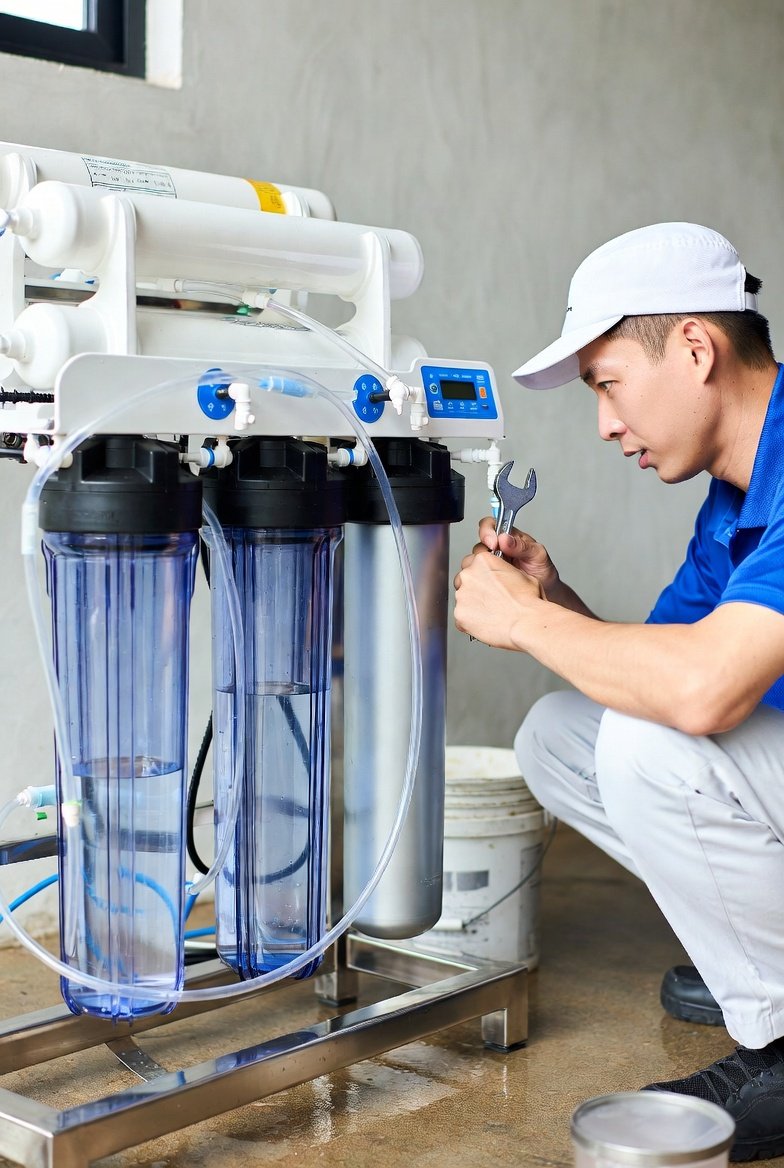
The RO Membrane — Where Costs Quietly Spike
The membrane is the operational core of the system — and its most expensive consumable component.
Its lifespan depends heavily on:
- Incoming water quality
- Pretreatment effectiveness
- Pressure stability
- Filter discipline
A membrane engineered to last several years can fail much sooner when upstream filters are ignored.
This is the moment maintenance shifts from predictable to painful.
Maintenance Cost by System Type
Under-Sink RO Systems
- Lowest maintenance burden
- Lower throughput
- Widely available filters
This combination is why under-sink RO typically delivers the strongest long-term financial value.
Tankless RO Systems
- Higher stress per gallon
- Greater pressure sensitivity
- Sometimes proprietary filters
Because these systems operate on demand, neglect tends to surface quickly — often as flow complaints.
Whole-House RO Systems
- Highest maintenance load
- Extensive pretreatment
- Large, costly membranes
- Continuous operation
Whole-house RO amplifies every maintenance decision.
Missed service doesn’t just reduce performance — it accelerates component wear.
Maintenance Timeline — What Ownership Actually Looks Like
Most residential RO systems follow a steady rhythm:
Component | Typical Interval | Risk If Ignored |
Sediment filter | 6–12 months | Pressure loss |
Carbon filters | 6–12 months | Chlorine damage |
Post-filter | ~12 months | Taste decline |
RO membrane | 2–5 years | Sudden failure |
When this rhythm is respected, costs remain smooth and predictable.
When ignored, expenses tend to cluster — often unexpectedly.
The Hidden Maintenance Cost: Water Waste
All reverse osmosis systems reject some water during filtration.
Maintenance directly affects how efficiently this happens.
Poor upkeep can lead to:
- Fouled membranes
- Reduced efficiency
- Higher reject-water ratios
For under-sink systems, the financial impact is usually modest.
For whole-house systems, increased wastewater can become a meaningful operating cost over time.
Installer insight: Monitoring efficiency during routine maintenance is one of the simplest ways to control long-term operating expenses.
Standard vs Proprietary Filters — The Quiet Cost Multiplier
One of the most overlooked ownership variables is filter sourcing.
Standard filters
- Competitive pricing
- Easier availability
- Lower lifetime cost
Proprietary cartridges
- Limited sourcing
- Higher replacement pricing
- Less flexibility
Proprietary filters do not automatically improve performance — but they often reshape the economics of ownership.
How Skipped Maintenance Turns Affordable Systems Expensive
Deferred upkeep does not eliminate cost.
It delays — and magnifies — it.
Common outcomes include:
- Early membrane replacement
- Persistent taste complaints
- Pressure decline mistaken for system failure
- Increased water usage
In practice, the most expensive RO systems are rarely the largest.
They are the least maintained.
DIY Maintenance vs Professional Service
Most routine maintenance is homeowner-friendly.
DIY Works Well When:
- Filters are accessible
- Components are standardized
- The system is under-sink
Professional Service Makes Sense When:
- The system is whole-house
- Pretreatment is complex
- Performance requires diagnosis
Paying for unnecessary service raises cost.
Avoiding professional help when it is needed raises cost more.
Installation Quality — The Hidden Maintenance Lever
Maintenance cost is partly decided on installation day.
Poor installation can:
- Mis-set tank pressure
- Create slow leaks
- Increase membrane stress
- Reduce filtration efficiency
Good installation quietly extends component life and reduces replacement frequency.
Ownership begins at setup.
A Simple Diagnostic for Owners
If maintenance suddenly feels expensive, it usually signals one of four issues:
- The system is oversized
- Pretreatment is inadequate
- Filters are proprietary
- Replacement schedules were ignored
When the system matches the problem it was meant to solve, maintenance becomes routine — and routine is affordable.
The Long-Term Ownership Math (5–10 Year View)
Looking only at annual cost can hide the bigger picture.
System Type | Estimated 5-Year Maintenance | Estimated 10-Year Maintenance |
Under-sink RO | $400 – $1,200 | $900 – $2,500 |
Tankless RO | $800 – $2,000 | $1,500 – $4,000 |
Whole-house RO | $2,000 – $7,000+ | $5,000 – $12,000+ |
Reverse osmosis is not expensive to maintain when expectations are realistic.
It becomes expensive when ownership discipline fades.
The Most Cost-Efficient Ownership Strategy
Homeowners who control maintenance costs tend to follow three principles:
- Replace pre-filters on schedule
- Avoid proprietary ecosystems when possible
- Size the system conservatively
These decisions matter more than brand selection.
Final Ownership Perspective
Reverse osmosis maintenance cost is not a flaw — it is the operating price of precision filtration.
When upkeep is routine and expectations are clear, RO remains one of the most cost-effective methods for producing high-quality drinking water at home.
When maintenance is treated as optional, costs rise quietly until they demand attention all at once.
For most households, a properly sized under-sink system with standard filters delivers clean water with minimal ongoing expense.
Larger systems simply require greater maintenance discipline — and a budget that respects it.