
Reverse Osmosis Installation Near Me: What Really Matters When Choosing a Local Installer
Searching for reverse osmosis installation near me usually means the biggest decision is already behind you.
You’re not debating filtration anymore.
You’re deciding who gets access to your plumbing — and that decision quietly determines whether the system performs flawlessly for years… or becomes a recurring maintenance problem.
Reverse osmosis technology is reliable. Installation quality is not always.
Two homes on the same street can install the exact same system and experience completely different outcomes. One never thinks about it again. The other deals with slow flow, odd taste shifts, or intermittent service calls.
The difference is rarely the equipment.
It is the installer.
Quick Reality Check — Local Installation Is a Performance Variable
Before choosing the closest installer, understand this:
- RO systems are standardized
- Homes are not
- Plumbing layouts vary
- Drain configurations differ
- Incoming pressure fluctuates by neighborhood
- Water chemistry changes regionally
Verify: Many performance complaints traced to RO systems originate from installation mismatches — not product defects.
This is why installation should be treated as a local execution decision rather than a universal checklist.
Why “Near Me” Matters More Than Most Buyers Realize
Local installers work inside patterns that national retailers and traveling contractors often overlook.
They typically understand:
- Regional plumbing conventions
- Typical pressure ranges
- Local code expectations
- Area-specific water issues such as hardness or chlorine load
That familiarity often influences system performance more than brand selection.
A properly installed mid-range system frequently outperforms a premium system installed without local awareness.
Installation is where theory meets the physical realities of your home.
What a Skilled Local Installer Actually Does
Professional installation involves far more than connecting tubing.
Experienced installers typically:
- Verify incoming pressure before setup
- Adjust storage tank pressure precisely
- Select drain methods that prevent backflow
- Route tubing to avoid stress points
- Flush and stabilize the system
Installers who skip these steps may not see immediate problems — but issues often surface weeks later when callbacks become complicated.
Field perspective: Many service technicians report that early performance complaints often trace back to rushed initial installs rather than failing components.
The Installer Quality Gap — Why Results Vary So Much
Not all installers approach RO with the same level of precision.
Some treat it as a quick plumbing add-on.
Others treat it as a pressure-balanced filtration system.
The difference shows up later in:
- Membrane lifespan
- Flow consistency
- Leak prevention
- Maintenance frequency
Installation is a one-time event that shapes years of ownership.
Under-Sink RO Installation Near You — The Most Common Scenario
Most local searches involve under-sink systems because they deliver drinking-water filtration without major infrastructure changes.
Where Local Installers Add Immediate Value
- Working around tight cabinetry
- Drilling faucet openings cleanly
- Aligning drain saddles correctly
- Protecting tubing paths
Where Installs Fail Most Often
- Drain saddle misalignment
- Incorrect tank pressure
- Tubing pinched behind drawers
- Rushed flushing
Incorrect tank pressure alone accounts for a significant portion of “slow system” complaints.
The equipment isn’t malfunctioning.
The setup is.
Tankless RO Installation — Where Local Experience Becomes Critical
Tankless systems operate with narrower tolerances than traditional tank models.
They typically require:
- Stable incoming pressure
- Accurate flow balancing
- Reliable electrical access
- Careful drain routing
Many installers comfortable with standard RO systems do not regularly install tankless units.
This mismatch is one of the most common causes of early performance frustration.
Professional observation: Tankless RO performs extremely well when installed under proper conditions — but exposes setup mistakes immediately.
Prior tankless experience should be considered essential.
Whole-House RO Installation — Always Local, Never Generic
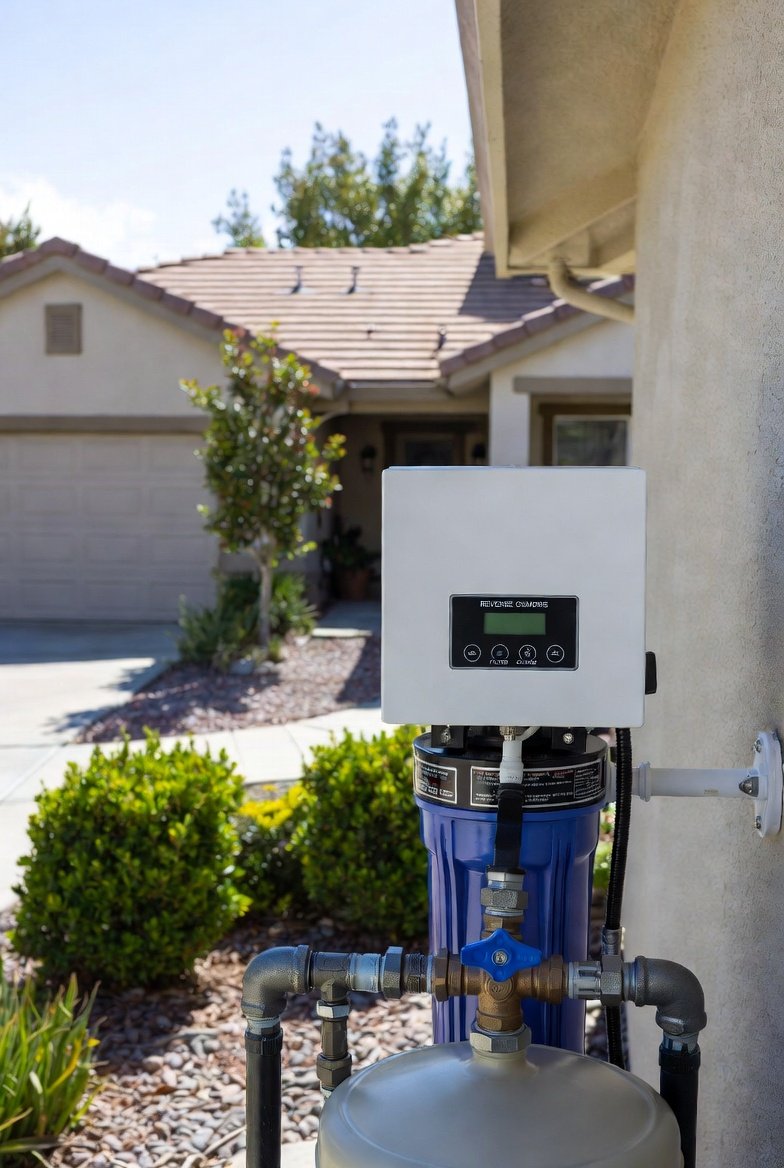
Whole-house reverse osmosis is not a simple install.
It is site-specific infrastructure work.
Typical planning includes:
- Pretreatment design
- Tank placement
- Code-compliant drainage
- Pressure re-boosting
- Access for maintenance
This is where proximity stops being convenience and becomes operational necessity.
Installations performed without local planning frequently exceed budget — or struggle to perform.
A Physical Reality Check Most Listings Skip
Whole-house RO systems often occupy space comparable to a water heater — sometimes more once storage tanks are included.
This matters because:
- Tight spaces increase labor time
- Drain routing becomes complex
- Maintenance access affects long-term reverse osmosis system cost
Installers who minimize footprint early often reintroduce it later as “required adjustments.”
Space is rarely optional.
What Actually Drives Local Installation Cost
Pricing varies by region, but the underlying drivers remain consistent.
Costs rise when:
- Cabinet or utility space is restricted
- Drain access is distant
- Incoming pressure is low
- Electrical work is required
- Plumbing is older
Most pricing variation reflects engineering time — not markup.
Two identical systems can produce dramatically different quotes depending on layout.
Questions That Separate Strong Installers From Risky Ones
Before accepting a quote, ask:
- How do you measure and set RO tank pressure?
- What local water conditions influence your installs?
- How do you prevent drain backflow?
- What post-install issues do you see most often?
Installers who answer calmly and specifically tend to install more reliable systems.
Precision usually signals experience.
Red Flags That Often Predict Problems Later
Proceed cautiously if an installer:
- Minimizes pretreatment needs
- Promises “maintenance-free” performance
- Rushes scheduling
- Avoids pressure discussions
- Treats drainage as trivial
Shortcuts taken during installation rarely stay hidden.
They resurface as performance complaints.
DIY vs Hiring a Local Installer — A Risk Decision
This is less about ability and more about consequence.
DIY Can Work When:
- The system is basic under-sink
- Plumbing access is straightforward
- Pressure meets manufacturer requirements
- You can monitor for slow leaks
Professional Installation Is Usually Safer When:
- The system is tankless or whole-house
- Plumbing is older
- Pressure is borderline
- A leak would damage cabinetry or flooring
Many homeowners hire locally not because installation is difficult — but because accountability matters.
How Installer Choice Quietly Shapes Lifetime Cost
Quality installation tends to:
- Extend membrane life
- Reduce wastewater
- Prevent hidden leaks
- Stabilize pressure
Poor installation often leads to:
- More frequent filter replacements
- Higher water bills
- Intermittent troubleshooting
- Earlier component wear
Installation is not just a day-one event.
It is a long-term cost variable.
Timing Your Local Installation
Installers often face heavy demand:
- During renovations
- Before home listings
- After water testing spikes
Scheduling outside peak windows can sometimes improve attention to detail.
Rushed calendars rarely produce meticulous installs.
The Installer Regret Pattern Professionals Quietly Notice
When homeowners encounter avoidable problems, one phrase surfaces repeatedly:
“I wish we had chosen a different installer.”
Rarely:
“I wish we bought a different system.”
Equipment is predictable.
Execution is not.
The Safest Way to Choose a Local Installer
Prioritize installers who:
- Ask detailed questions about your plumbing
- Discuss pressure early
- Evaluate drainage carefully
- Explain pretreatment when relevant
- Avoid one-size-fits-all recommendations
- Best reverse osmosis system
Confidence without inspection is not expertise.
It is guesswork.
Final Direction
If you’re searching for reverse osmosis installation near me, resist the instinct to default to the closest provider or lowest quote.
Choose the installer who demonstrates the clearest understanding of local conditions and takes system setup seriously.
Installation is a one-time opportunity to get the system right.
Choose carefully, and the filtration fades into the background.
Choose poorly, and it becomes something you think about far more often than you ever wanted.