
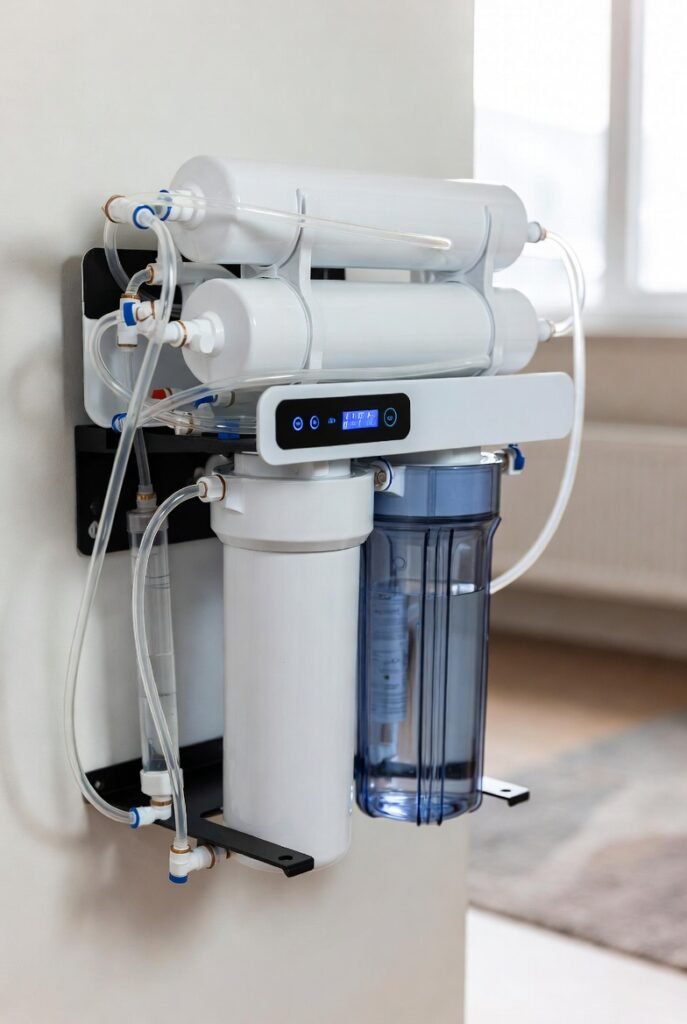
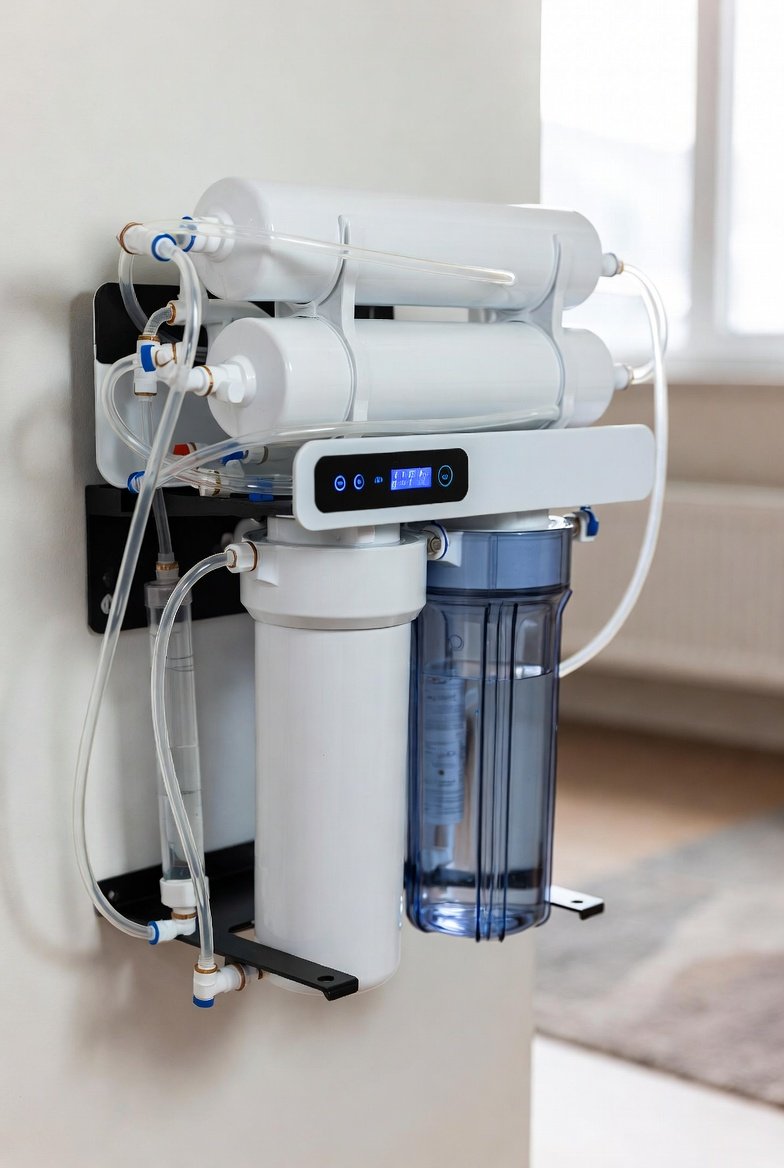
Best Reverse Osmosis System: How to Decide What Actually Fits Your Home
Choosing the best reverse osmosis system isn’t about chasing the most advanced setup or the longest feature list. It’s about choosing a system that fits how water is actually used in your home, how much purified water you need, and how much maintenance you’re realistically willing to handle.
Most people land here after hearing mixed advice—installers pushing oversized systems, product pages promising “perfect water,” or forums warning about waste and pressure loss. The truth is simpler: reverse osmosis works extremely well when applied correctly, and poorly when it’s overapplied.
This guide is designed to help you decide clearly, without sales pressure.
TL;DR — Quick Decision Snapshot
Household Type | Recommended RO Type |
Apartment or city water | Under-sink RO |
Small family household | 50–75 GPD under-sink RO |
Limited cabinet space | Tankless RO |
Well water with verified contamination | Whole-house RO (rare) |
For most homes, the “best” choice is an under-sink RO system sized correctly—not the biggest system available.
What Reverse Osmosis Does Well—and Where It Stops
Reverse osmosis pushes water through a semi-permeable membrane that blocks a wide range of dissolved contaminants. RO is excellent at reducing:
- Dissolved salts and minerals
- Heavy metals like lead
- Nitrates and many chemical residues
Where systems most often disappoint homeowners is expectation mismatch. RO does not automatically:
- Fix hard water scale throughout the house
- Solve low water pressure caused by plumbing issues
- Eliminate all biological contaminants without proper pretreatment
In residential installs, this is where systems most often fail—not because RO is ineffective, but because it’s used for the wrong problem.
Start With the Decision That Actually Matters: Where RO Is Applied
The biggest buying mistake isn’t brand choice—it’s choosing the wrong application level.
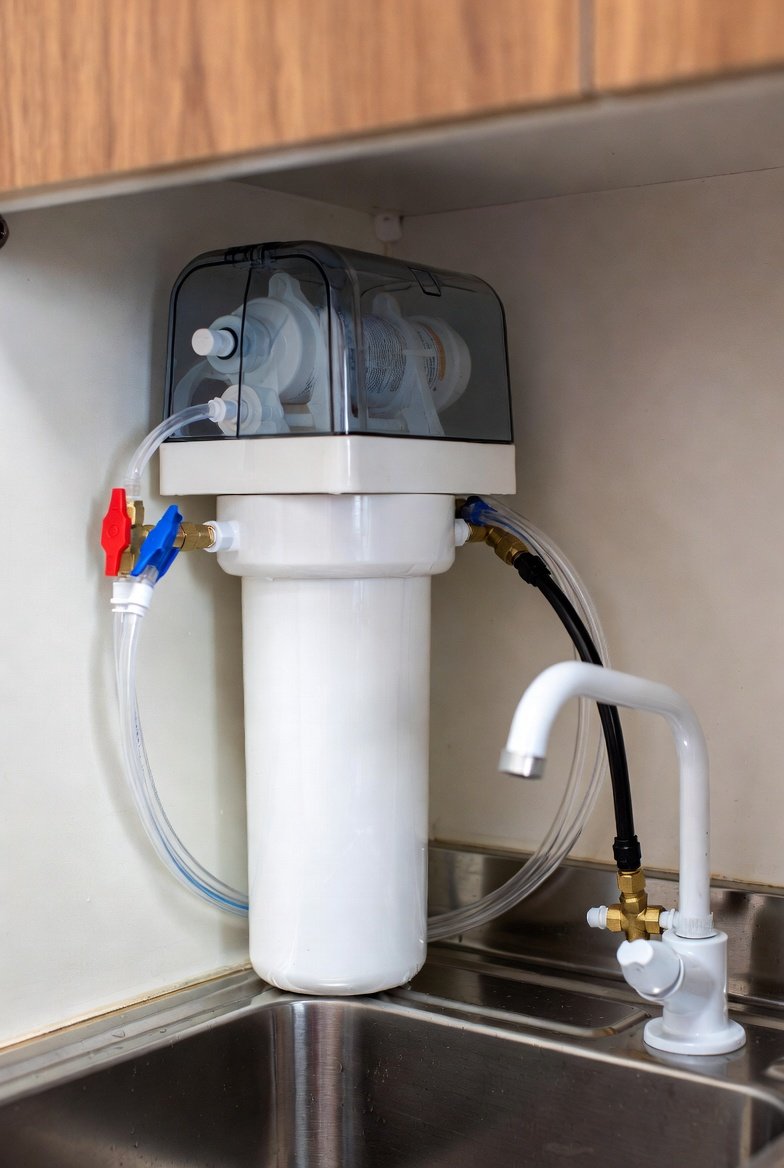
Under-Sink Reverse Osmosis (Best Fit for Most Homes)
Installed beneath a kitchen sink, these systems supply purified water to a dedicated faucet.
Best for:
- Drinking and cooking water
- Small to medium households
- Municipal water or treated well water
Trade-offs:
- Limited to one location
- Requires cabinet space for a small tank
In real households, under-sink RO consistently delivers the best balance of performance, cost, and simplicity.
Tankless Reverse Osmosis (Convenience-Driven Choice)
Tankless systems purify water on demand and remove the storage tank.
Best for:
- Tight cabinet layouts
- Users who want faster refill rates
Trade-offs:
- Higher upfront cost
- Osmosis system cost
- Greater sensitivity to incoming water pressure
Homes often overspend here. Tankless works well—but only when conditions support it.
Whole-House Reverse Osmosis (Special-Case Solution)
Whole-house RO treats all water entering the home.
Best for:
- Specific well-water contamination scenarios
- Homes with verified, system-wide water issues
Trade-offs:
- High Ro system installation and operating costs
- Significant wastewater production
- Professional design almost always required
Whole-house RO is rarely the “best” option—it’s the necessary option only in narrow cases.
RO Stages: What Actually Matters (and What Doesn’t)
Stage counts are marketing shorthand. Performance comes from function, not numbers.
Core components that matter:
- Sediment filter: Protects downstream stages
- Carbon filters: Improve taste and remove chlorine
- RO membrane: The primary purification step
- Post-filter: Final taste polishing
Extra stages like remineralization can be useful, but they don’t improve purification. Membrane quality and replacement accessibility matter far more than stage count.
Performance Factors That Separate “Best” From “Adequate”
When comparing systems within the same category, these factors matter most:
- Water Efficiency: RO produces wastewater by design. Efficient systems reduce waste ratios, but no residential RO system eliminates waste entirely.
- Daily Production Capacity: Measured in gallons per day (GPD). For most households, 50–75 GPD is sufficient. Larger numbers raise cost without improving quality.
- Pressure Compatibility: Low incoming pressure reduces efficiency. Some systems tolerate this better; others require booster pumps.
- Maintenance Reality: Filters and membranes need regular replacement. Non-proprietary, readily available cartridges are cheaper long-term. Avoid systems that lock you into custom replacements unless there’s a clear benefit.
Grounded Comparison Snapshot
Factor | Under-Sink RO | Tankless RO | Whole-House RO |
Typical Cost | Low–Moderate | Moderate–High | High |
Installation | DIY-friendly | Moderate | Professional |
Waste Water | Moderate | Moderate | High |
Maintenance | Manageable | More frequent | Complex |
Best Use | Drinking water | Space-limited homes | Rare cases |
What “Best” Looks Like in Real Homes
For most households, the best RO system has:
- A proven, industry-standard membrane
- Straightforward filter replacement
- Reasonable waste ratio
- Clear documentation and long-term support
- No exaggerated purity or “zero-waste” claims
It doesn’t rely on extreme stage counts or proprietary consumables that inflate long-term costs.
Common Buying Mistakes That Cost Homeowners Money
- Defaulting to whole-house RO without confirmed need
- Expecting RO to replace water softening
- Ignoring cabinet space and service access
- Prioritizing features over serviceability
Avoiding these mistakes often matters more than brand choice.
When RO Isn’t the First System You Need
If your main concern is scale buildup, appliance damage, or staining, a water softener or conditioner may be the correct first step. RO works best after hardness issues are addressed.
RO is a precision tool. It works best when paired with the right supporting systems.
Final Takeaway
The best reverse osmosis system cost isn’t the most aggressive—it’s the most appropriate.
- Start with where purified water is actually needed
- Confirm your incoming water conditions
- Choose a system that fits daily use without overreaching
Applied correctly, reverse osmosis is one of the most reliable household water treatments available. Applied blindly, it becomes expensive complexity.
FAQ
Q1: What is the best reverse osmosis system for most homes?
A1: For most homes, a properly sized under-sink RO system provides the best balance of performance, cost, and ease of maintenance.
Q2: Do tankless reverse osmosis systems work better?
A2: Tankless systems offer convenience and faster flow, but they are more sensitive to pressure and water quality. They are not automatically better for every home.
Q3: Is whole-house reverse osmosis necessary?
A3: Whole-house RO is rarely necessary and is usually reserved for specific well-water contamination cases verified by testing.